International Economics
Master the tools for economic analysis and decision‑making.

Quick Links
Major Overview
As Qatar and other Gulf countries become more important in the global economy, the demand for skilled economists is increasing. The International Economics (IECO) major instills strong analytical and quantitative skills that distinguish you on the job market and among applicants to graduate and professional schools.
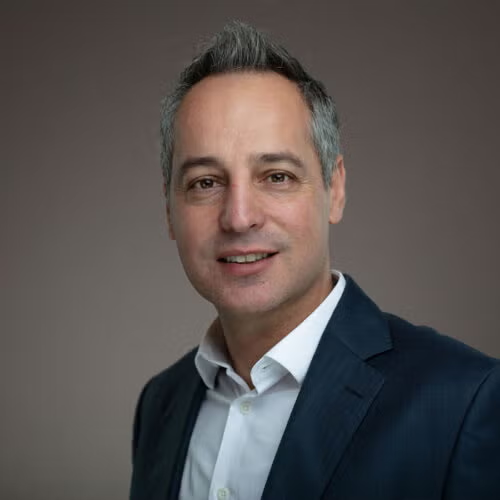
Alexis Antoniades
Curricular Field Chair

Julien Moutte
Curricular Dean
At a Glance
4
IECO core courses
3
Applied economics courses
1
Senior seminar and research project
Career Paths
IECO alumni have pursued careers in finance, consulting, law, management, media, international development, government, non-profit organizations, and academia.

Declaring Your Major
You will declare your major during the first semester of your sophomore year in consultation with your advisor. The process involves preparing a proposal outlining the reasons why you want to pursue the IECO major and how it aligns with your academic interests and career goals.
Why Study International Economics?
International Economics (IECO) majors receive rigorous training in economic analysis and quantitative methods. Through core economics courses and courses on international trade, international finance, economic development, and globalization, you will acquire the skills required to assess markets, understand economic relationships among countries, and evaluate the effects of policy on the welfare of individuals, businesses, and countries. This ability is essential to making sound decisions based on a deep understanding of the economic forces at work in the world. All students are expected to master the theoretical and empirical tools necessary to conduct such analysis.
Learn more about the requirements for the IECO major, see sample courses, and explore additional options.

Skills You’ll Learn in the IECO Major
- Develop expertise in quantitative analysis through courses in calculus, statistics, and econometrics
- Learn how fiscal and monetary policy choices impact financial markets, countries, and individuals
- Produce relevant research for your senior seminar that will instill the skills you need for graduate education or professional economics research
Alumni Spotlight
What You Can Accomplish
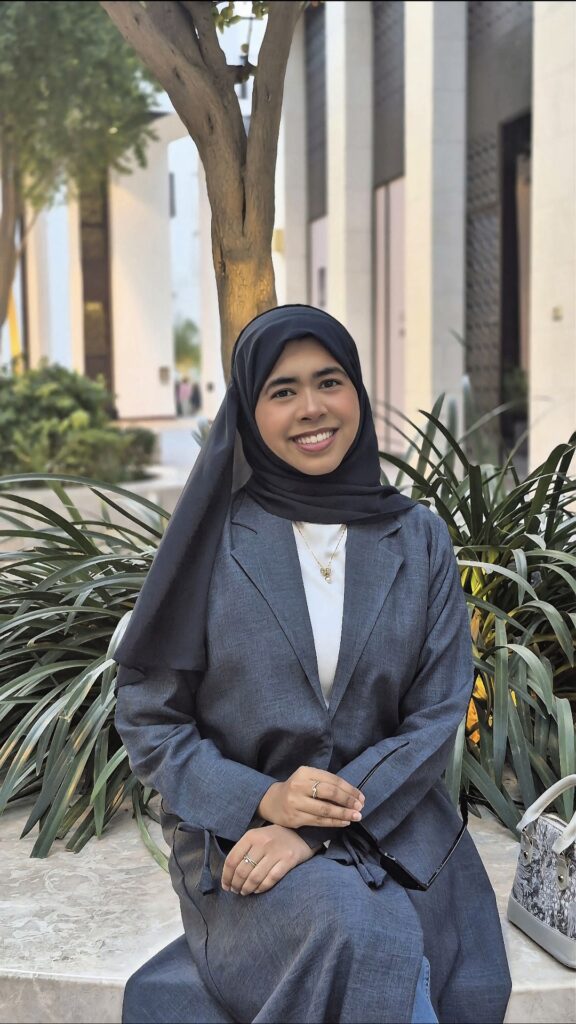
Labeeba Ahmed, Researcher
Currently a researcher at Qatar University’s Social and Economic Survey Research Institute, Class of 2022 graduate Labeeba Ahmed is contributing to economics and finance policy research in the GCC region.
“IECO at GU-Q gave me a strong foundation in economics and econometrics through hands-on coursework, amazing faculty mentorship, and a thesis that shaped my research interests, which I later pursued in graduate studies at HBKU. The analytical skills and research mindset I developed at GU-Q continue to guide how I approach my work today as a researcher at Qatar University.”