International History Major
See international relations through the lens of social, cultural, and intellectual history.

Quick Links
Major Overview
Go beyond the study of the formal relations between states to learn new ways of understanding the globalization of historical change. The major in International History (IHIS) combines a broad introduction to the analysis of historical changes that transcend national boundaries with the opportunity to explore a particular theme or question in the context of a self-designed concentration.

Associate Professor Phoebe Musandu
Curricular Field Chair

Morgan Fisher
Curricular Dean
At a Glance
1
Core course
4
IHIS electives
3
Courses organized around a self-designated concentration
Career Paths
IHIS alumni have pursued careers in higher education, journalism, banking, law, consulting, intelligence, and government.

Declaring Your Major
You will declare your major during the first semester of your sophomore year in consultation with your advisor. The process involves preparing a proposal outlining the reasons why you want to pursue the IHIS major and self-designated concentration, and how each aligns with your academic interests and career goals.
Why Study International History?
Go beyond the study of formal relations between states—the traditional subject matter of diplomatic history—to address themes in social, cultural, and intellectual history. Draw on ideas and data from anthropology, philosophy, sociology, political science, religious studies, and literature, and employ a range of theoretical tools and methodological approaches to contribute to contemporary historical scholarship. Along the way, you will develop a highly marketable set of critical thinking, argumentation, and writing skills that will enable you to stand out in any workplace.
Learn more about the requirements for the IHIS major, see sample courses, and explore additional options.
Skills You’ll Learn in the IHIS Major
- Develop the ability to explain and contextualize change over time based on evidence
- Distinguish between types and genres of sources and between evidence-based conclusions and unfounded statements
- Use sources to formulate questions and construct original arguments, and develop the ability to support conclusions orally and in writing with evidence and appropriate documentation
- Identify, evaluate, and compare historians’ different interpretations of the past, thus understanding the discipline of history as an ongoing conversation between sources, scholars, and students
- Identify and trace major themes, issues, and developments in comparative, international, and global history, and gain the ability to formulate comparative questions and arguments about different societies and cultures
Alumni Spotlight
What You Can Accomplish
Asma Shakeel, Rhodes Scholar
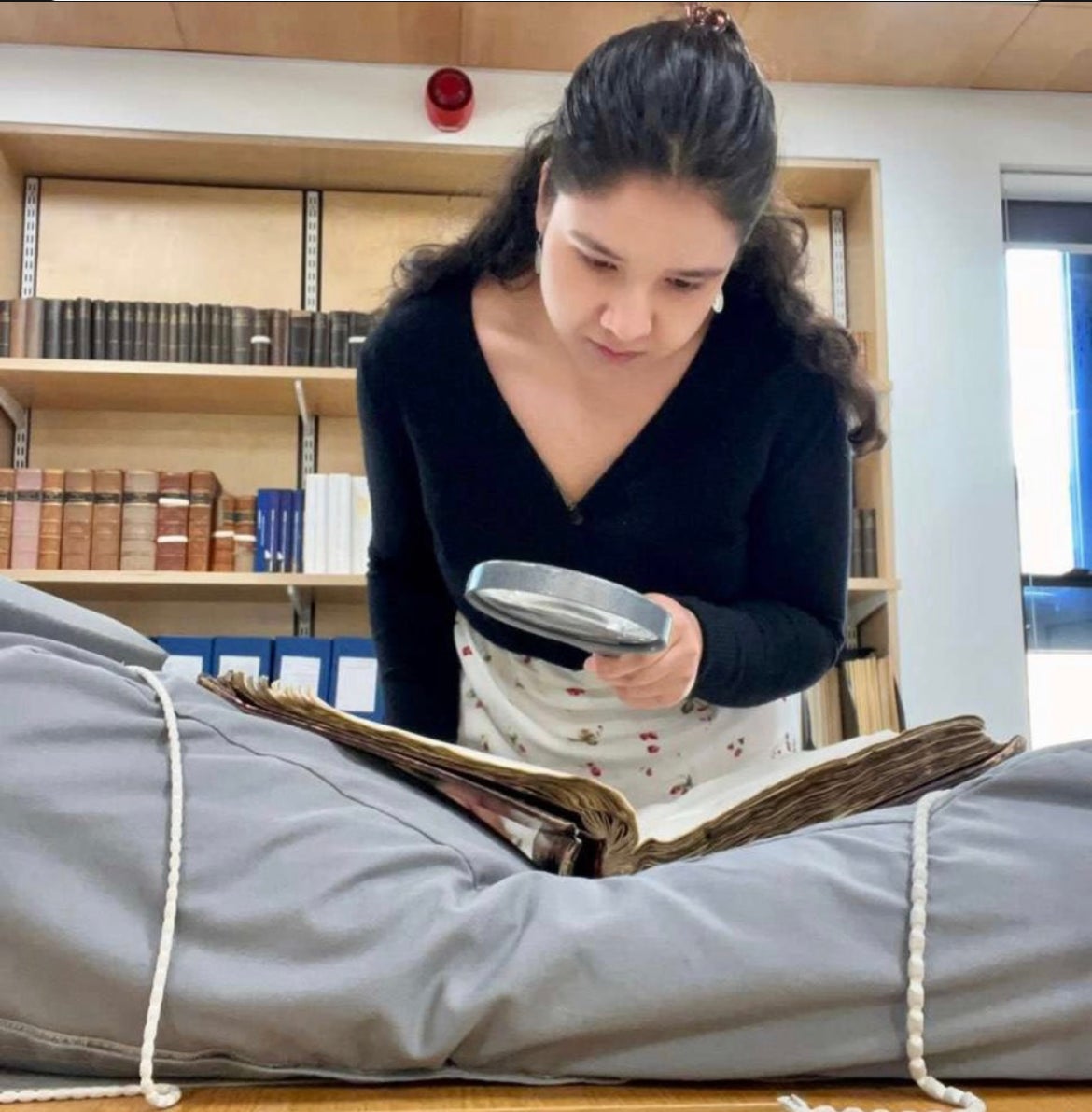
Class of 2024 graduate Asma Shakeel is currently studying at Oxford University on a Rhodes Scholarship she earned by conducting in-depth research for her major in International History.
Asma first became interested in missionary history in the GU-Q course America and the Muslim World. As she studied American missionaries in the Middle East, she saw a similar pattern in her home region of Kashmir.
Asma’s professors encouraged her to explore further, leading to a research project on Britain’s Church Missionary Society records, one of the only historical sources on missionary activities in Kashmir. Inspired to continue her quest for history, Asma is working to create an archive of Kashmiri-generated history.
“What we need right now is for students and young people to believe that their questions matter and their curiosity is the way forward,” she said.