Indian Ocean Studies Minor
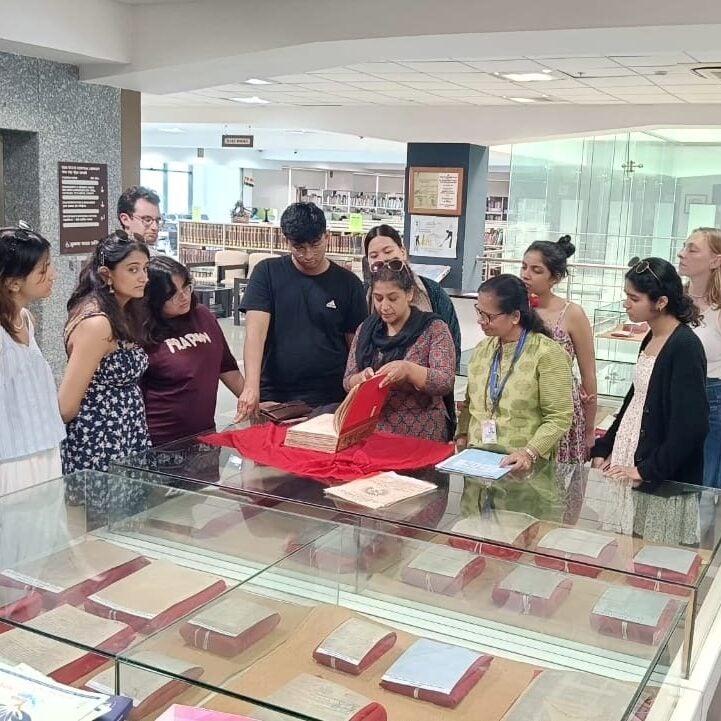
Dive into the deep historical, cultural, and intellectual currents between nations bordering the Indian Ocean.
Quick Links
Overview
The Indian Ocean minor offers a unique lens through which to examine the intricate web of connections that have shaped the region’s history, culture, and geopolitics for millennia. This dynamic and interdisciplinary field of study will help students navigate the rich cultural connections, circulations and complexities in a region that has played a crucial role in global history and contemporary international relations.
Stretching from the eastern coast of Africa to the western shores of Australia, and from South East Asia to the Antarctic, the Indian Ocean has been a vital conduit for trade, migration, and cultural exchange for over 5,000 years. This vast maritime space has facilitated the movement of people, ideas, and goods, fostering the development of complex societies and intricate trade networks that have left an indelible mark on world history. Learn more about our Indian Ocean research.
Program Administrators
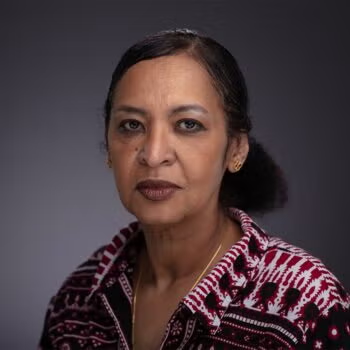
Dr. Rogaia Abusharaf
Director of the Indian Ocean Studies Minor

Dr. Valentini Pappa
Faculty Liaison

Elizabeth Wanucha
Student Advisor

Areas of Study
Key Focus Areas
- Maritime Trade and Economic Network
- Cultural Exchange and Diaspora Studies: Analyzing the movement of peoples, languages, and cultural practices across the ocean rim
- Religious Interactions: Exploring the spread and adaptation of major world religions, including Islam, Hinduism, Buddhism, and Christianity, throughout the Indian Ocean world
- Environmental History and Marine Ecology
- Geopolitics and International Relations: Studying historical and current political dynamics, conflicts, and collaborations among nations bordering the Indian Ocean
- Literature and Arts: Examining the rich literary traditions and artistic expressions that have emerged from and been influenced by Indian Ocean cultures
Interdisciplinary Focus
As an Indian Ocean studies minor, you can draw from a diverse range of existing courses across multiple disciplines, including Anthropology, History, Economics, Literature, and Political Science. You are also strongly encouraged to incorporate select coursework from our Education City partner institutions. This process is completed in consultation with the Curricular Chair.
Requirements
Course Requirements
- An introductory course, CULP 2270: Introduction to the Indian Ocean World
- Five elective courses to build regional expertise in African and Asian Studies on transregional connections in the Indian Ocean
- Please note that fifty percent (50%) of course content must be related to a specific country, set of countries, or cultures within the Indian Ocean rim. Thematic relevance, temporal scope, and research must be considered
Sample Courses
- ANTH 4129: Indian Ocean Research
- ARTH 2820: Theorizing Art in Qatar
- CULP 3371: Public Knowledge-Digital Deep
- CULP 3374: Thinkers of the Global South
- CULP 3470: Pearling Worlds
- HIST 1301: History of China I
- HIST 2107: Global Oceans: Themes and Connections
- HIST 4610: Sufism – A Social History
- IPOL 3574: Energy in Sub-Saharan Africa
- IPOL 4481: Resistance, Rebellion, Revolution

Alumni Spotlight
Laying the groundwork for my Ph.D.
“The minor was a formative part of my undergraduate experience. The courses helped me think relationally about the Indian Ocean as a connected social, political, and historical space rather than as isolated regions. Building on this foundation, I went on to pursue my MA in Social Research at Lancaster University, and am now a Ph.D. student in Sociology, where my research focuses on Nepalese migration to the Gulf. The minor played a central role in developing both my intellectual interests and my research direction, and it continues to inform my academic work today.”
—Aashish Karn, Class of 2023, International Politics major, Indian Ocean Studies minor