- Public Talk
Materialising ‘Arab Jerusalem’
Resistance, Resilience and Continuity 1948 – 2025
About
The dominant narrative of 1948-1967 Jordanian Jerusalem, if there is one at all, is of a marginalized city with passive citizens, decimated by the extraction of its vibrant West Jerusalem heart, constrained politically by new state structures and generating little autonomous urban development. This assumption is simplistic and inaccurate. A counter-narrative emerges if one listens to the oral narratives told by Jerusalemites, examines rare archival records and diaries, scans the newspapers of the time, and investigates the spatial transitions in its urban landscape across two decades.
This research presents an alternative story that reveals the centrality of Arab Jerusalem to the agentic empowerment of the inhabitants of al-Quds as they reshaped the post-Nakba space and place. The multiscalar relations empowered by the Qalandiya-Jerusalem airport materialized a vibrant ‘Arab Jerusalem’, an emanant Arab metropolitan space thickly connected into the urban circuits weaving together the wider Arab region. Such integrative effects enhanced the cosmopolitanism of its street life, opened up political space, generated transformative investment, reshaped its neighbourhoods and created exciting opportunities for personal and communal development.
This presentation (based on ongoing research for a book to be published with Edinburgh University Press) also uncovers the development and continuity of a ‘Jordanian Jerusalem’, as crafted by Jerusalemites themselves across numerous transitions, ruptures and attempts at control from its emergence in 1948 until the al-Karama/May uprising of 2021. The work sheds light on the emergence and continuity of what can be called a ‘Jordanian Jerusalem’ and its ongoing links to Amman and the Arab world. Despite the fact that today’s story of occupied Jerusalem is central to understanding the ongoing protest and resistance, today’s Jerusalem cannot be understood in depth without understanding Jordanian and Palestinian politics in East Jerusalem since 1948.
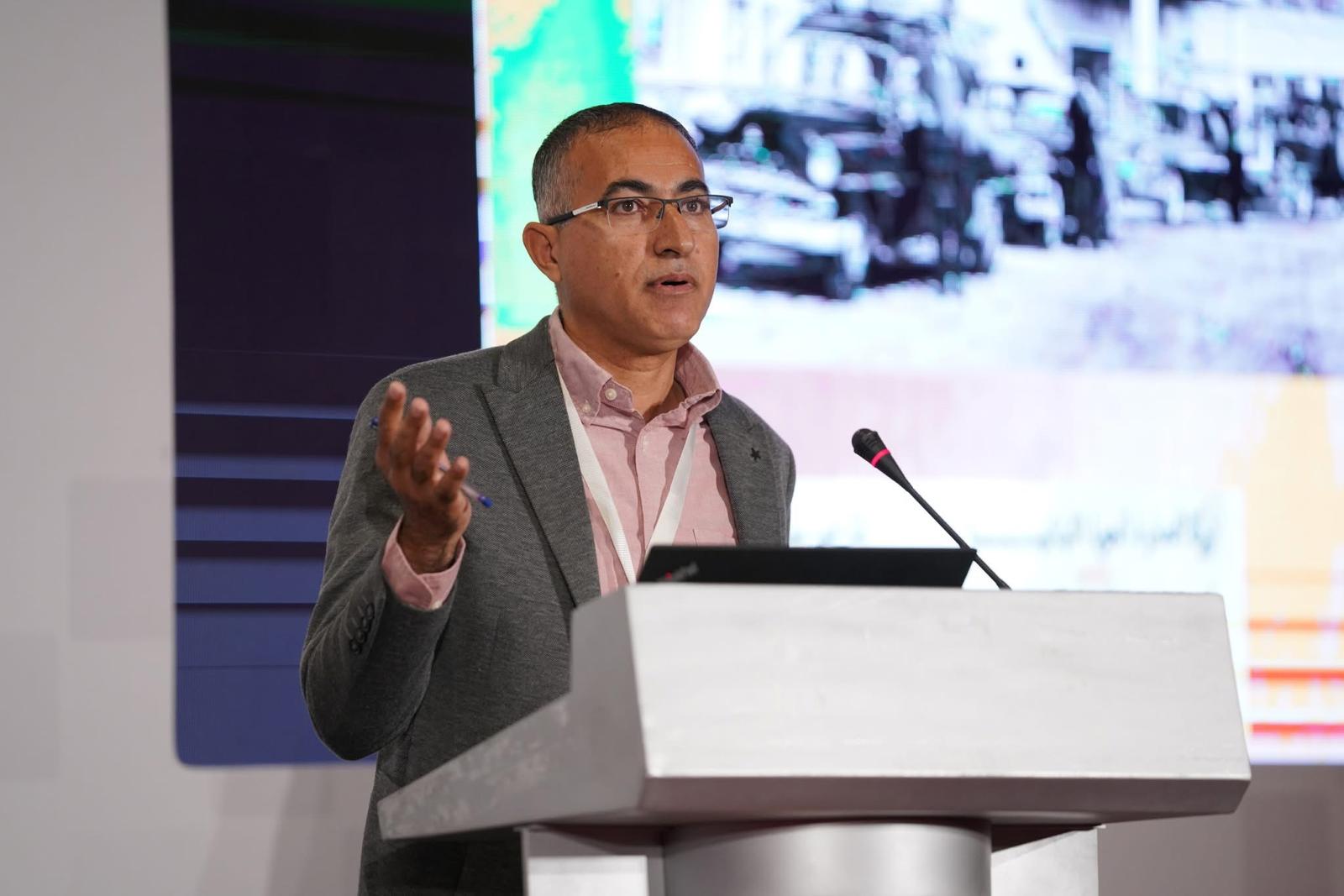
Dr. Mansour Nasasra is a Palestinian political historian and anthropologist, currently Visiting Researcher at the Arab Center for Research and Policy Studies and a Research Fellow at Ulster University, Belfast. He completed his PhD at the University of Exeter, where he subsequently was Senior Lecturer in International Relations. He has been a CBRL research fellow at the Council’s Kenyon Institute in East Jerusalem, funded by the British Academy. His publications include: The Naqab Bedouins: A Century of Politics and Resistance (Columbia University Press, 2018), and the Routledge Handbook on Middle East Cities (2020) (ed.). His most recent article is “The City of Beersheba and the Network of Political and Social Relations in Gaza City” (Urban Studies 51.1, 2024). Other recent work on Jerusalem and the Oslo Accords was published in the edited volume From the River to the Sea: Palestine and Israel in the Shadow of Peace, translated into Arabic by the Arab Center for Research and Policy Studies (2024). He has also published widely about the Palestinians in Israel, the frontiers of Empire, Colonial Policing and the Naqab Bedouin.
Moderated by Dr. Gerd Nonneman
Speakers
Mansour Nasasra
Related Events
Recent Economic Developments and Outlook for 2026 in Latin America and the Caribbean

Asian Migration in a Global Context