Women’s and Gender Studies Minor
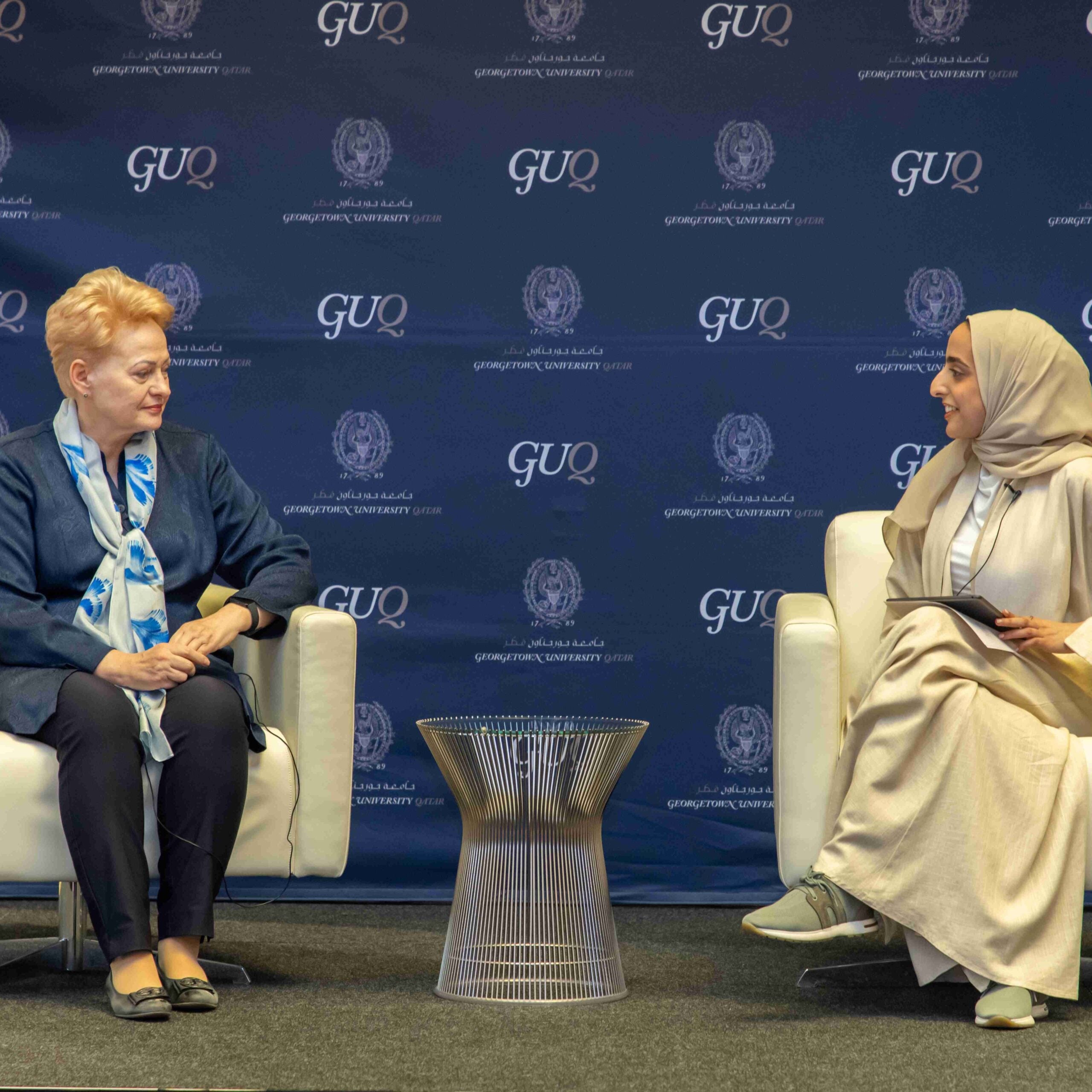
Pioneering former President of Lithuania Dalia Grybauskaitė and Moza Al Hajri (GU-Q’26) discuss “Youth and Women for Peace”
Examine how gender shapes knowledge, power, and society through an interdisciplinary, cross-cultural lens.
Quick Links
Overview
The Women’s and Gender Studies (WGS) minor offers an interdisciplinary, critical, and creative exploration of women’s rights and gender justice in a global, cross-cultural context. It foregrounds gender as a site of intellectual inquiry, examining how it intersects with race, ethnicity, class, and sexuality, and how it shapes the power of social transformation on both local and global scales.
What you’ll study
Drawing on cross-cultural and transnational perspectives, the minor invites students to critically explore a range of topics, including women’s religious lives and leadership; women’s lives, labor, and arts; approaches to primary sources on women’s history; the intersectional and historical meanings of gender; gender in international relations and diplomacy; the history of gender roles and performances; structural violence, social justice, and gender activism; the gendered politics of knowledge production; and media and other representations.
What you’ll gain
As an interdisciplinary minor, WGS draws simultaneously on sociology, history, literature, philosophy, economics, religion, and more. It makes often-invisible systems visible, trains students to think across disciplinary borders, and addresses gaps that other disciplines have historically left unexamined. The minor doesn’t replace a major — it completes it, preparing students for a world in which questions of gender equity, representation, and justice are active debates in nearly every field.
Career Paths
Beyond making students more aware of gender issues around them, it prepares them for careers in academia, international diplomacy, economics, NGO and nonprofit work, public policy, journalism, and research. It is especially aligned with students interested in global governance, social justice, human rights, development, media, intersectionality, social movements, and identity-based analysis, complementing existing coursework across all five majors.
Program Goals
- Train critical thinking across fields. Students learn to ask who is centered in any body of knowledge, whose experience is treated as universal, and whose is treated as exceptional — a skill that transfers to law, medicine, journalism, history, and business.
- Make invisible systems visible. Students gain the vocabulary and methods to examine assumptions about gender, work, family, and power that often go unquestioned.
- Build genuinely interdisciplinary skills. The minor trains students to think across disciplinary borders, an ability employers and graduate programs consistently seek.
- Prepare students for the world they’ll work in. Questions of gender equity, workplace discrimination, reproductive rights, care work, and representation are active policy and professional debates across fields; the minor equips students to analyze them rigorously.
Administrators
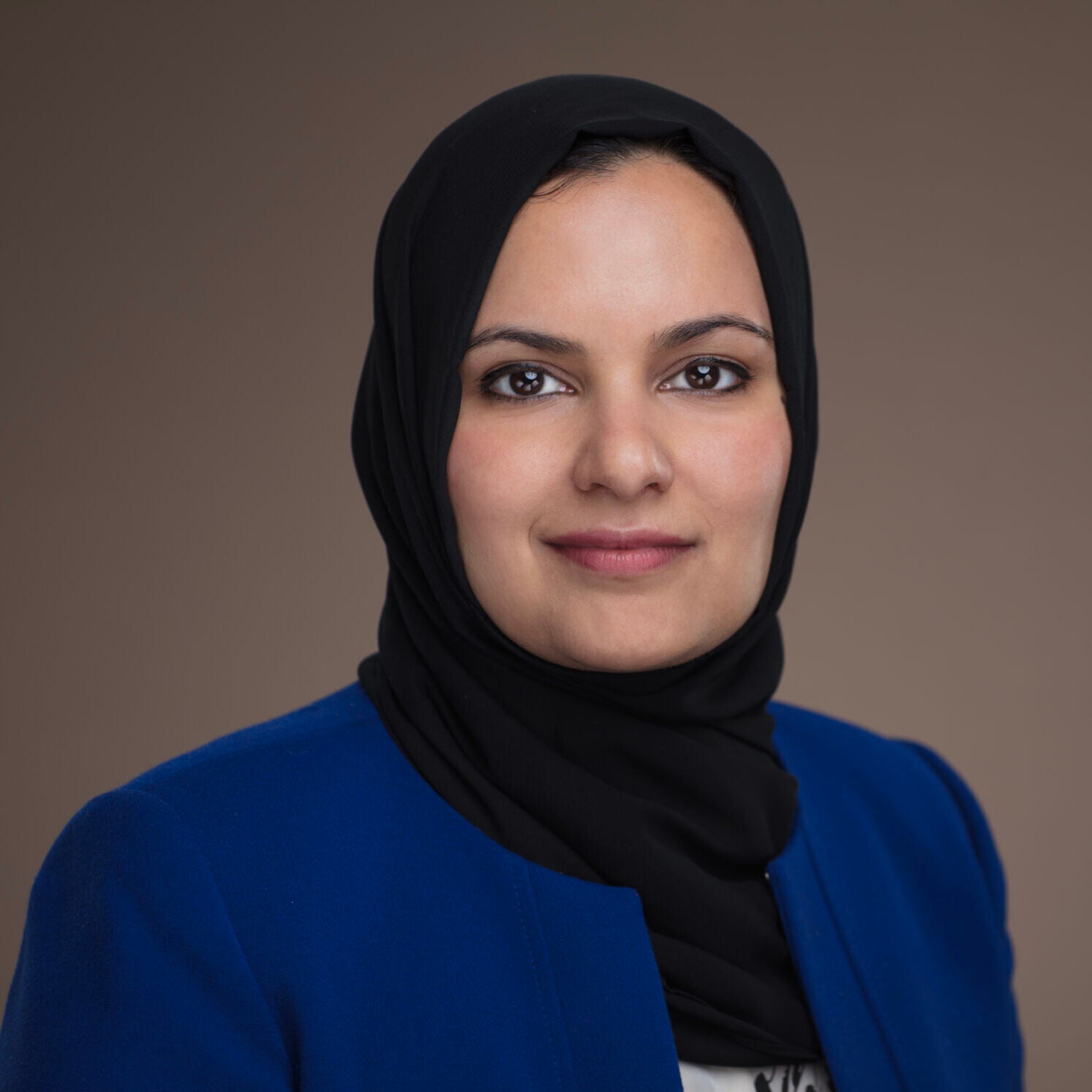
Dr. Sohaira Siddiqui
Director of the Women’s and Gender Studies Minor

Dr. Valentini Pappa
Faculty Liaison

Elizabeth Wanucha
Student Advisor
Requirements
Courses
The WGS minor requires the completion of six courses (18 credits):
- 1 introductory course taught by full-time faculty, counted as a theoretical or methodological introduction to the field.
- 5 electives in any discipline, field, or region that can be cross-listed. To count, more than 50% of the course material and syllabus must be explicitly related to WGS methods or content, and one of the student’s main assignments must address a WGS topic.
Not all courses are offered every semester. Students should consult with their academic advisor to plan a course of study. Completing a minor requires careful planning to ensure you take qualifying courses and complete all requirements on time.
Declaring the Minor
To declare the minor, review the minor requirements, ensure that you can complete the requirements for the minor in time for graduation, and then complete the WGS Minor Declaration Form.
Please note that students may elect to pursue both a minor and a certificate, along with their other graduation requirements, as long as they can complete the requirements for all in time for graduation.
If you have any questions about the minor requirements and your graduation, please consult Elizabeth Wanucha, student advisor for certificates and minors.
Courses
Qualifying courses
Not all courses are offered each semester. Additional cross-listed courses qualify when more than 50% of the syllabus addresses WGS content. Consult your advisor.
Fall 2026 Available Courses
| Course ID | Title | Instructor | Attribute |
| ECON-4477-70 | Gender & Economic Development | Lamis Kattan | elective |
| HIST-1099-71 | Hist Focus: muslim woman | Waleed Ziad | intro |
| HIST-1099-72 | Hist Focus: Oral/African Women | Phoebe Musandu | intro |
| HIST-3610-72 | Topic: Documenting Gulf Women | Maryam AlSada | elective |
| HIST-4130-70 | Gender and Empire | Nadya Sbaiti | elective |
| PHIL-2519-70 | Feminist Philosophy | Damien Tissot | intro |
| PHIL-2519-71 | Feminist Philosophy | Damien Tissot | intro |

Student Spotlight
Jana Zablawi, Class of 2028
“Growing up in a house of girls, I developed an early awareness of the challenges women face. I began by directing a documentary on refugee women in Jordan, working with Microfunds for Women, and researching informal entrepreneurship among refugee women.
When I arrived at GU-Q and discovered the Women’s and Gender Studies minor, it felt less like a choice and more like an inevitability.”