Arts, Heritage, and Cultural Diplomacy Minor
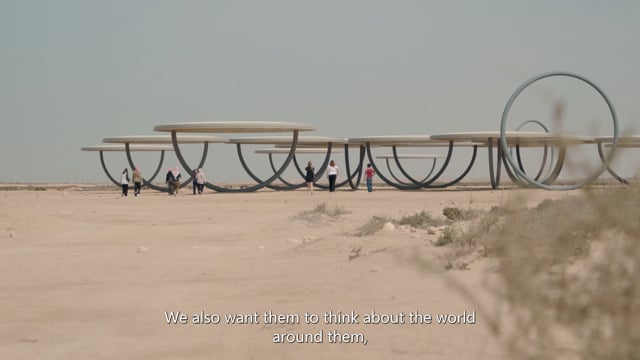
Explore how the arts and cultural heritage shape diplomacy, identity, and soft power in a connected world.
Quick Links
Overview
The Minor in Arts, Heritage, and Cultural Diplomacy (AHCD) offers an interdisciplinary and structured pathway to study the intersections of arts and heritage with international relations, cross-cultural understanding, and diplomacy. In the twenty-first century, cultural diplomacy has become a strategic dimension of global affairs, as nations increasingly draw on artistic practices and heritage to build soft power, strengthen bilateral relations, and advance international cooperation.
Alongside issues of diplomacy and international exchange, the minor invites students to engage critically with the ethical, political, and institutional dimensions of cultural representation, public memory, and heritage preservation across visual, verbal, and performative arts. Through faculty-mentored research, students will bring these questions into sustained dialogue with their own academic and professional interests.
Career paths
Combining existing course strengths and faculty expertise, the minor complements every major at GU-Q and is designed for students drawn to careers in diplomacy, cultural policy, museum and heritage management, arts administration, and global nonprofit organizations.
Program goals
- Equip students with the theoretical and practical tools to analyze the intersections of arts, heritage, and diplomacy in regional and international contexts.
- Develop students’ understanding of how cultural heritage and the arts influence global diplomacy, identity formation, and soft power strategies.
- Prepare students for careers and graduate study in cultural policy, heritage conservation, museum management, arts administration, and diplomacy.
Administrators

Dr. Firat Oruc
Director of Arts, Heritage, and Cultural Diplomacy Minor

Dr. Valentini Pappa
Faculty Liaison

Elizabeth Wanucha
Student Advisor
Requirements
The AHCD minor requires the completion of six courses (18 credits) and a capstone project
- 2 core courses (6 credits)
- 4 elective courses (12 credits), selected to ensure breadth across the categories of arts and culture, heritage, and diplomacy and international relations. The fulfilling electives are designated on a semester-by-semester basis.
- Capstone thesis or an ePortfolio integrating their learning and providing practical, applied exposure.
Declaring the Minor
To declare the minor, review the minor requirements, ensure that you can complete the requirements for the minor in time for graduation, and then complete the AHCD Minor Declaration Form.
Please note that students may elect to pursue both a minor and a certificate, along with their other graduation requirements, as long as they can complete the requirements for all in time for graduation.
If you have any questions about the minor requirements and your graduation, please consult Elizabeth Wanucha, student advisor for certificates and minors.
Courses
Qualifying courses
Not all courses are offered each semester. Additional cross-listed courses qualify when more than 50% of the syllabus addresses AHCD content. Consult your advisor.
Sample courses
| ARAB-3397-70 | Andalusia in modern Arabic Lit | Elective | Art and Culture |
| ARAB-4300-70 | Naguib Mahfouz:Writer & Nation | Elective | Art and Culture |
| CULP-3287-70 | Id & Globlztn: Contmp Arab Wr | Elective | Art and Culture |
| CULP-3289-70 | Cinema in Arab World | Elective | Art and Culture |
| CULP-3380-70 | Contemporary Gulf Cinema | Elective | Art and Culture |
| ENGL-2800-70 | Intro to Creative Writing | Elective | Art and Culture |
| ENGL-4000-70 | Capitalism and Mysticism | Elective | Art and Culture |
| HIST-3821-70 | History and the Graphic Novel | Elective | Art and Culture |
| CULP-3572-70 | Art, Heritage, and Identity | CORE | Art and Culture & Heritage |
| HIST-3105-70 | Global History/Int’l Perspecti | Elective | Diplomacy and International Relations |
| INAF-3967-70 | Doha Seminar:Borders | Elective | Diplomacy and International Relations |
| IPOL-3385-70 | Contemp Issues in Human Rights | Elective | Diplomacy and International Relations |
| IPOL-3471-70 | Digital Globaliz. IR & the Law | Elective | Diplomacy and International Relations |
| IPOL-3477-70 | Negotiation/Organiz Conflict | Elective | Diplomacy and International Relations |
| IPOL-3478-70 | Digital Trade Law & Policy | Elective | Diplomacy and International Relations |
| IPOL-3575-70 | SocPol&Dev Sub-Saharan Africa | Elective | Diplomacy and International Relations |
| IPOL-4490-70 | World Politics Lab I | Elective | Diplomacy and International Relations |
| PHIL-2216-70 | Ethics and Int’l Affairs | Elective | Diplomacy and International Relations |
| CULP-2370-70 | The Digital Society | Elective | Heritage |
| CULP-3371-70 | Public Knowledge-Digital Deep | Elective | Heritage |
| HIST-3610-72 | Topic:Documenting Gulf Women | Elective | Heritage |
| HIST-3611-70 | Shaping of Modern Iran | Elective | Heritage |
| HIST-4130-70 | Gender and Empire | Elective | Heritage |
| THEO-2424-70 | Spiritual Ways & Human Desire | Elective | Heritage |
| THEO-2535-70 | Religions of India:Hindu&Budda | Elective | Heritage |
| THEO-2920-70 | World Religions Today | Elective | Heritage |
Capstone
Students complete a capstone project in the form of either a research thesis or an ePortfolio integrating their learning and providing practical, applied exposure.
Students pursuing the Minor in Arts, Heritage, and Cultural Diplomacy (AHCD) may complete a faculty-mentored research thesis as their capstone requirement. The thesis should be a substantial, original research project of approximately 25–30 pages, including footnotes and bibliography, focused on a topic related to arts, heritage, cultural diplomacy, cultural policy, museums, creative industries, public memory, or related fields.
Students may build the AHCD thesis on a paper previously written for a course. However, the thesis must go well beyond a revision or expansion of earlier work. It should demonstrate a significant development of the original project through a new theoretical framework, a different method, new primary or secondary sources, original data collection, or a substantially reframed research question.
Projects may address regional or global cases and may draw on visual, verbal, performative, archival, institutional, or policy-based materials. Students are expected to discuss the scope, method, and direction of the thesis with their faculty mentor early in the process.
Students pursuing the Minor in Arts, Heritage, and Cultural Diplomacy (AHCD) may choose to complete an ePortfolio in lieu of a written research thesis. The ePortfolio is a faculty-mentored, curated website that brings together coursework, research, and co-curricular engagement across the minor. It must include the following components:
1. Coursework Showcase. For each of the six minor courses, students must include:
- a brief course description with a relevant visual;
- at least one representative written assignment;
- a 300-word reflection explaining the course’s contribution to their understanding of arts, heritage, and cultural diplomacy.
2. Capstone Project: Digital Research Project. Students must complete a faculty-mentored digital research project on a topic related to arts, heritage, and cultural diplomacy. The project should use appropriate digital tools, such as visuals, structured text, hyperlinks, or audio and video, to present research findings and demonstrate analytical rigor, effective digital communication, and sustained engagement with the field.
3. Co-Curricular Enrichment Reflection. Students must complete at least one relevant co-curricular activity, such as a lecture, workshop, exhibition, performance, field visit, museum visit, conference panel, or cultural program, and submit a 500-word reflection connecting the experience to the minor and/or capstone project.
4. Final Reflective Essay. Students must submit a 1,500-word final reflective essay synthesizing their interdisciplinary learning across coursework, research, and co-curricular experiences. The essay should emphasize thematic connections, intellectual development, and emerging interests rather than provide a course-by-course summary.
5. Video Narrative Presentation. Students must produce a 15-minute video presentation introducing the ePortfolio capstone project and reflecting on their overall learning journey in the AHCD minor.
Capstone Project Timeline (Research Thesis or ePortfolio)
Students completing the AHCD capstone requirement, whether through a research thesis or ePortfolio, should adhere to the timeline below. Students accepted into Honors in the Major may not complete a research thesis during the same academic year; however, they may complete the ePortfolio while working on their major thesis.
Projects involving human participants must receive Institutional Review Board (IRB) approval before research begins. Students should consult the GU-Q Institutional Review Board webpage for information about the protocol and approval process.
- April 15: The AHCD Review Committee communicates its final decision to the student.
- Summer, prior to the project year: Begin background research and develop the capstone project.
- October 1: Submit an extended abstract, brief progress report, and preliminary bibliography to the faculty mentor and the AHCD program director.
- November 15: Submit an early draft of the project to the faculty mentor and the director.
- December 1: The faculty mentor provides written feedback to the student and submits a brief progress-approval note to the director.
- February 15: Submit the second draft of the project to the faculty mentor and the director.
- March 1: Deadline for the faculty mentor to determine whether the project is approved to proceed to final submission and public presentation.
- March 20: Public presentation of the capstone project. The date will be confirmed and aligned, where appropriate, with Honors in the Major presentations.
- April 1: Submit the final capstone project to the faculty mentor and the director.