French Language Program and Minor

With a community of more than 320 million speakers, French is the fifth most spoken language in the world. It is an official language in 29 countries and is spoken in most international organizations, such as the United Nations. In addition to introducing a rich cultural world, learning French will boost a wide variety of educational and professional opportunities.
Quick Links
Overview
With a comprehensive course sequence from beginner to post-advanced levels, students immerse themselves in French language, literature, arts, history, and politics—gaining the cultural and linguistic fluency needed to navigate the Francophone world. Building on Georgetown’s strength in international affairs, and engaging with a language spoken on every continent, the program prepares graduates to excel on a global stage.
French minors achieve strong language proficiency while deepening their understanding of French and Francophone societies. By complementing their primary field of study, students strengthen their linguistic, cultural, and literary foundations and sharpen essential skills in writing, research, and critical thinking—opening doors to global opportunities across the humanities, diplomacy, business, and beyond.
Program Administrators
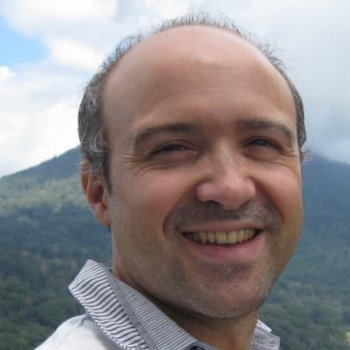
Dr. Damien Tissot
Director of the French and Global Languages Program

Dr. Valentini Pappa
Faculty Liaison

Elizabeth Wanucha
Student Advisor
Getting Started
Placement Examination
All students seeking to study French must take the GU-Q French placement exam before enrolling in a French class. Incoming students will receive a link on their GU-Q Academics course website on Canvas to take the French Placement Test prior to the start of the semester. This online exam is scored automatically. Remember your placement score, as it may be requested by the instructor on the first day of class.
Students interested in attending French classes who have not yet taken the French Placement Test, or are cross-registering from other universities, can submit a request by contacting the Director of the Global Languages Program.
Course Placement By Exam Score
| Exam Score | Courses Number | Course Name |
|---|---|---|
| 0-25 | FREN 1001 | Introductory French I |
| 26-40 | FREN 1002 | Introductory French I |
| 41-55 | FREN 1501 | Intermediate French I |
| 56-70 | FREN 1502 | Intermediate French II |
| 71-85 | FREN 2001 | Advanced French I |
| 86-95 | FREN 2002 | Advanced French II |
| 96-110 | FREN 2761/2551 | Topics for Oral Proficiency Composition and Style |
| 111+ | FREN 3350/3351 | Gateway Course |
How to Apply for the Minor
If you are interested in completing the French Minor, please fill out the French Minor Declaration form. If you have any questions, please contact the Director of the Global Languages Program or your Advising Dean.
Planning Your Minor
Most classes are only taught once a year. Plan your course selections accordingly. If you intend to take French courses during study abroad, ensure the appropriate course level, and be sure to inform your instructor, the Director of the Global Languages Program, and your advising dean about your language course plan.
Requirements
Courses
Students minoring in French must take a total of 6 French classes for a total of 18 credit hours
- 1 Gateway course (3350 or 3351)
- 5 Intermediate level or above courses
Examples of Student Progression Tracks
- Student 1: Introductory French I, Introductory French II, Intermediate I, Intermediate II, Advanced I, Advanced II, Composition and Style, Gateway to Culture/literature
- Student 2: Intermediate I, Intermediate II, Advanced I, Advanced II, Composition and Style, Gateway to Culture/literature
- Student 3: Intermediate II, Advanced I, Advanced II, Composition and Style, Gateway to Culture/literature, French & Francophone Philosophies
Notes on Credits
- AP credits count toward the minor
- FREN 2761 Topics for Oral Proficiency may count toward the minor only if the student has previously taken FREN 2551 Composition and Style
- FREN 2761 will not count toward the minor if taken after a 3000-level or higher course
- At least 3 of the 6 required courses have to be taken at Georgetown. See the Guidelines for Credit Transfer from Study Abroad if you plan to take French courses abroad
French Beyond the Classroom
Tutoring
French Tutoring is a free service offered to all students enrolled in a French course at GU-Q. Tutoring sessions are a safe and comfortable environment to work on assignments and review concepts. Students can work with a peer tutor – another student who has met rigorous selection criteria and been professionally trained. Learn more about tutoring at GU-Q.
La Communauté Francophone Student Club
This student-led club provides opportunities to enhance French learning and exposure to francophone cultures outside of classes. Through activities ranging from movie screenings to poetry readings, informal gatherings to academic lectures, La communauté francophone provides a vibrant environment to explore the Francophone world. If you are interested, please contact the president of the club.
French and Francophone Databases
GU-Q’s library offers a detailed list of the resources available at GU-Q, in Education City, and more broadly in Qatar: French Language Resources in GU-Q Library.
Oral Proficiency Exam
The French Proficiency Exam is an oral language test that fulfills the School of Foreign Service’s modern language requirement. Candidates will be judged on their ability to summarize a press article and sustain a conversation on topics in international affairs, politics, economics, culture, and civilization, relating specifically to the French or Francophone worlds, while using a wide range of vocabulary, correct grammar, proper pronunciation, and a professional level of language.
The article will be taken from a non-specialist newspaper, journal, or magazine internationally recognized within the French-language press. The content of the article is the basis for the conversations, and as such, it is an integral component of the exam. A student who is not able to discuss topics because of a lack of general knowledge will, in all probability, not pass the exam.
This is exam falls under the University Honor Pledge.
Who is eligible for the oral proficiency exam?
Any student who wants to show proficiency in French can register to be tested. A student does not need to be enrolled in a French course to take the exam. Because the candidate should demonstrate a low advanced level (according to the ACTFL standards) in speaking and reading, students enrolled in the French program should take the Oral Proficiency Exam after having completed at least FREN 2002, Advanced French II. Typically, students take the proficiency exam in the fall, while being enrolled in FREN 2761, Topics for Oral Proficiency, which is specifically designed to prepare them for the test.
When and how should I register for the oral proficiency exam?
The Oral Proficiency Exam is given three times a year. Every student who wants to be tested should officially apply by filling out this form before the deadline.
| Session | Application Deadline | |
|---|---|---|
| Fall | Second week of the semester | End of Add/Drop period |
| Fall | Last two weeks of November | Last Thursday of October |
| Spring | Last two weeks of April | Last Thursday of March |
What does the exam consist of?
Two exam administrators will be present for each exam; one may be present via Zoom. A third administrator may also be present for training purposes. All exams may be recorded, for internal purposes only.
Upon arrival, all students must present a current GU ID card with a photo or a QID. The student will be provided with an abbreviated version of the Georgetown Honor Code in writing and will be asked to sign it.
The exam administrators will also collect the student’s articles and handwritten notes and remind them that they are not allowed to share any information regarding the exam.
- Part 1 (15 minutes): Reading and Preparation: Students will have 15 minutes to read a press article in French. The length of the article will be approximately 1200 words, although it may vary according to the difficulty of the text. No outside materials (including dictionaries, course notes, etc) or technology (mobile phone, computer, AI, etc) may be consulted. However, students may write notes on a blank sheet of paper provided by the evaluators during the reading part of the exam, and they can consult their notes during the speaking part of the exam.
- Part 2 (15 minutes): Conversation: After the 15 minutes of preparation, the student is directed to the exam room for the 15 minutes of the speaking part. First, the candidate will summarize the content of the article in an organized manner. Then, the exam administrators take turns asking comprehension and critical thinking questions related to the article. The examinee should demonstrate the ability to situate the news within a historical perspective. At the end of this section, the examinee should be able to state his/her position on the issue and state the reasons behind that position. For more information on criteria, please consult the exam rubrics.
How is the proficiency exam graded?
The proficiency exam is evaluated on a “Pass” or “Fail” basis. Students who pass the proficiency exam are able to sustain a discussion dealing with current events and demonstrate familiarity with relevant historical, cultural, political, and economic information. Students are also able to participate in routine social interactions to discuss their interests, studies, and future plans.
A pass on the proficiency exam is comparable to achieving an Advanced Mid, in reading comprehension and oral production as per the Teaching of Foreign Languages Proficiency Guidelines (ACTFL) rating. The assessment criteria are available here.
If a student fails the exam, he or she needs to wait until the next semester to take it. The proficiency exam cannot be taken twice within the same semester. Therefore, senior students are required to take the proficiency exam in the fall if they have not completed it before.
What content will the exam cover and how should I prepare for it?
The article will cover one of the following topics: Political life in France (the French Republic and its political institutions, political parties, elections and their procedures, environmental policy, immigration, secularism, social welfare, the education system, work organization and professional life, the European Union, the francophone world). Because the article will be taken from a newspaper or magazine internationally recognized within the French-language press, it is crucial that the candidate should stay up to date with the news within the francophone world.
Most of the topics mentioned above are covered in Advanced French I and II as well as more advanced courses such as Topics for Oral Proficiency, French & Francophone Philosophies, etc. FREN 2761 Topics for Oral Proficiency is specifically designed to prepare you for the exam.
Learn more about the French Oral Proficiency Exam.
Frequently Asked Questions
I have studied French previously, but would like to start over. Can I enroll in French 1001?
You must first take the placement test. The placement test score will indicate the appropriate course and level in which to enroll. If you need to wait for a semester to enroll in the appropriate level, contact the Director of the French and Global Languages Program to discuss your options.
Can I take my French class as pass/fail?
No, by policy, in the SFS, you cannot take a language course as Pass/Fail. The policy reads: “All undergraduate students in the School of Foreign Service are expected to enroll in a modern language class each semester, for a letter grade.”
I am proficient in French, but my language skills haven’t been assessed. Do I need to enroll in a French class?
Yes, you must be enrolled in a language course until your level of proficiency has been assessed.
I will be in DC next semester. Can I take French there?
Yes. The DC campus offers a wide range of French courses. Make sure that you choose the appropriate course within the French language course sequence. If you are not sure, contact the Director of the French and Global Languages Program or your former instructor at GU-Q.
I will be studying abroad next semester. What will happen to my language requirements?
You must discuss your options with your Advising Dean and the Director of the French and Global Languages Program before you finalize your study abroad plans.
What if I fail the oral proficiency exam?
You can take the Oral Proficiency Exam until you pass. However, you cannot take the exam more than once a semester. You will have to wait until the next semester to take it.
I plan to complete the minor in French. Do I need to take the oral proficiency exam?
Yes, the Oral Proficiency Exam is part of the requirements to graduate from the SFS. Its completion is independent of the Minor’s requirements.
I have already completed the oral proficiency exam in another language, but I’m also fluent in French. Can I still take the exam in French?
Yes. You can request to be tested in French in addition to being tested in other languages.