Rethinking sustainability through Islamic heritage
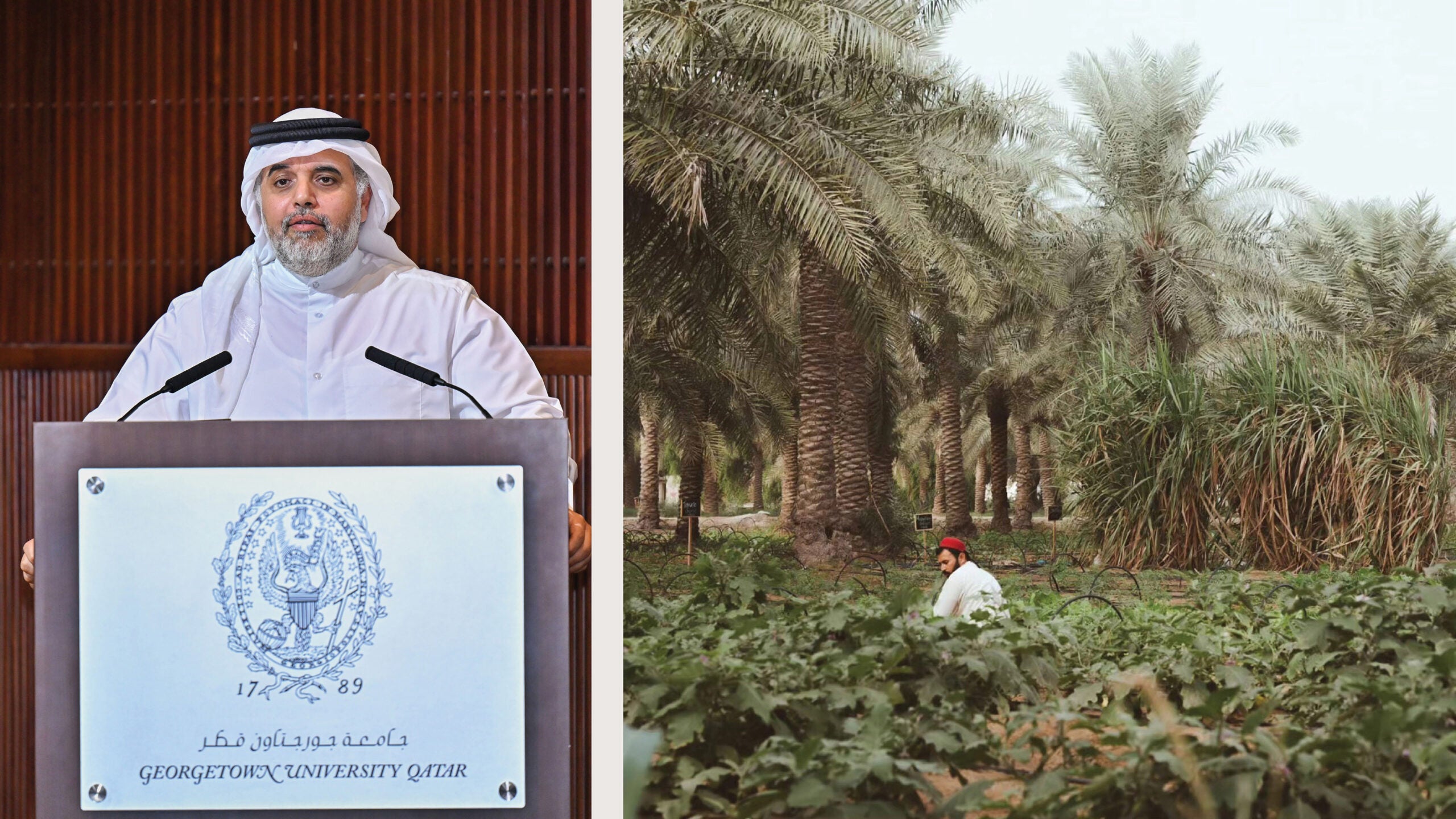
For Ambassador Fahad Al Attiyah, sustainability is not a modern concept imported into the Gulf in response to climate change. Its foundations, he argued, are deeply rooted in Islamic understandings of humanity’s relationship with the earth.
That idea shaped a conversation at Georgetown University in Qatar with Al Attiyah, founder of the 50-acre Heenat Salma Farm, a project that applies principles drawn from Islamic heritage to agriculture, architecture, craftsmanship and natural resource use.
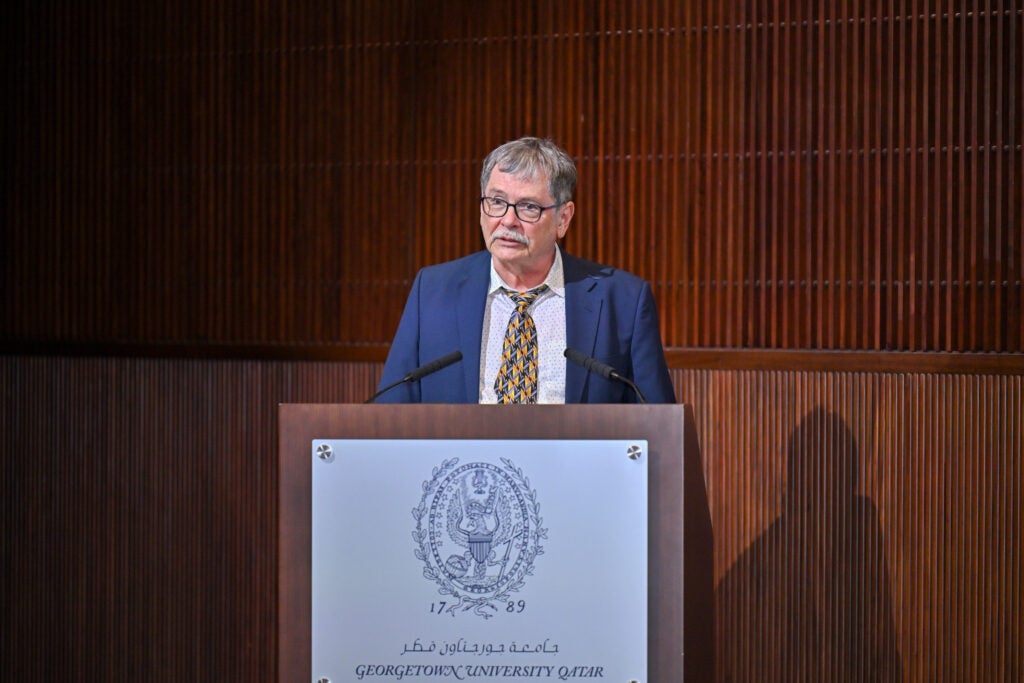
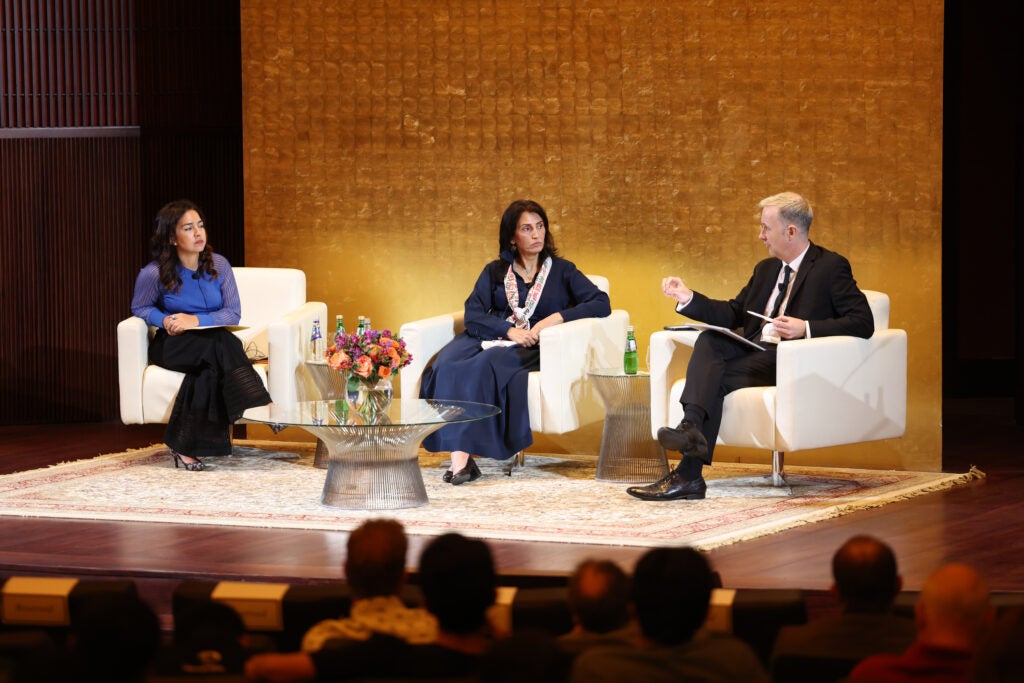
Acting Dean Clyde Wilcox opened the event, followed by a discussion moderated by Patrick Laude, professor of theology at GU-Q. About 150 people attended, including the ambassadors of Albania, Japan, the Philippines and Liberia.
Al Attiyah approached sustainability through a fundamental question: What is humanity’s place in the world, and what responsibilities come with it?
In his view, the Earth is not simply a collection of resources available for unrestricted exploitation. Human beings are entrusted with it, and that trust carries an ethical responsibility for how land, water, food, buildings and other resources are used.
That perspective informed his critique of some assumptions associated with modernity. He questioned the idea of human “liberation” through greater control over nature, arguing that when speed and efficiency become measures of progress in themselves, another question must be asked: “But at what cost?”
CO2 concentration levels almost doubled over the last 100 years. No civilization in history under the ‘metaphysical world’ created such power to destroy the Earth seven times over than the modern mentality, yet we still celebrate it and call it progressive. Do you want to join the Titanic knowing it is going to sink? I would rather go in a dinghy boat.
Ambassador Fahad Al Attiyah
Heenat Salma, he explained, is not simply an environmental project or an experiment in sustainable agriculture. It explores how principles inherited from Islamic civilization can inform contemporary life without requiring a retreat from modernity.
Qatar, he suggested, provides a revealing setting for that experiment: a country with abundant energy but scarce water, significant land and a relatively small population. These conditions raise questions about resource use and sustainable development.
The farm seeks practical responses through four interconnected areas: organic agriculture, traditional crafts and handmade production, architecture using locally appropriate materials, and knowledge applied to challenges such as soil degradation and water conservation.
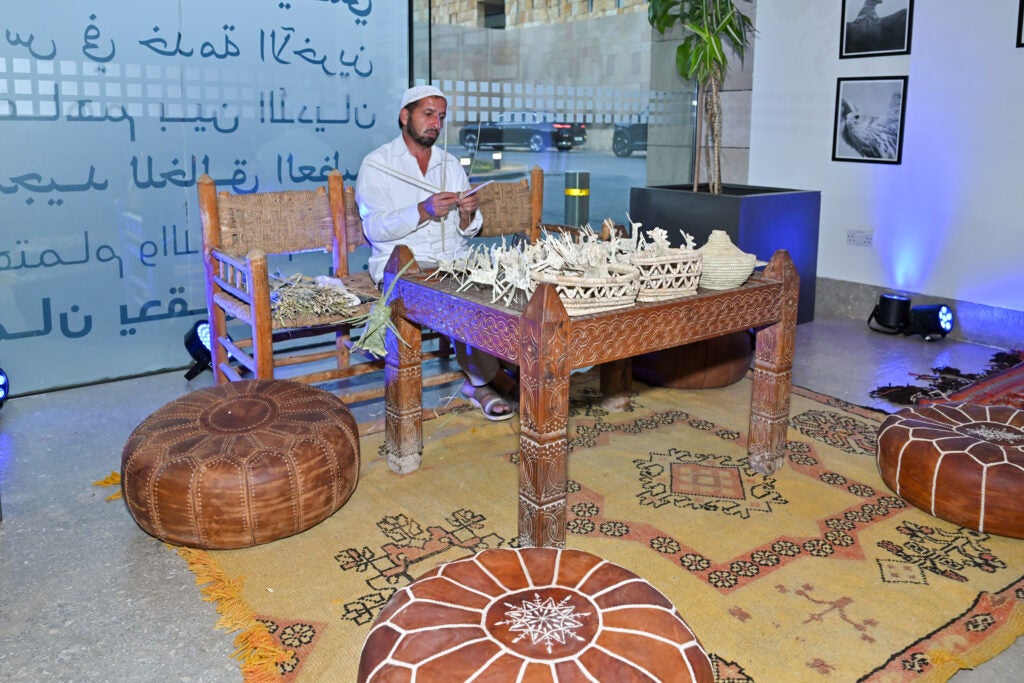
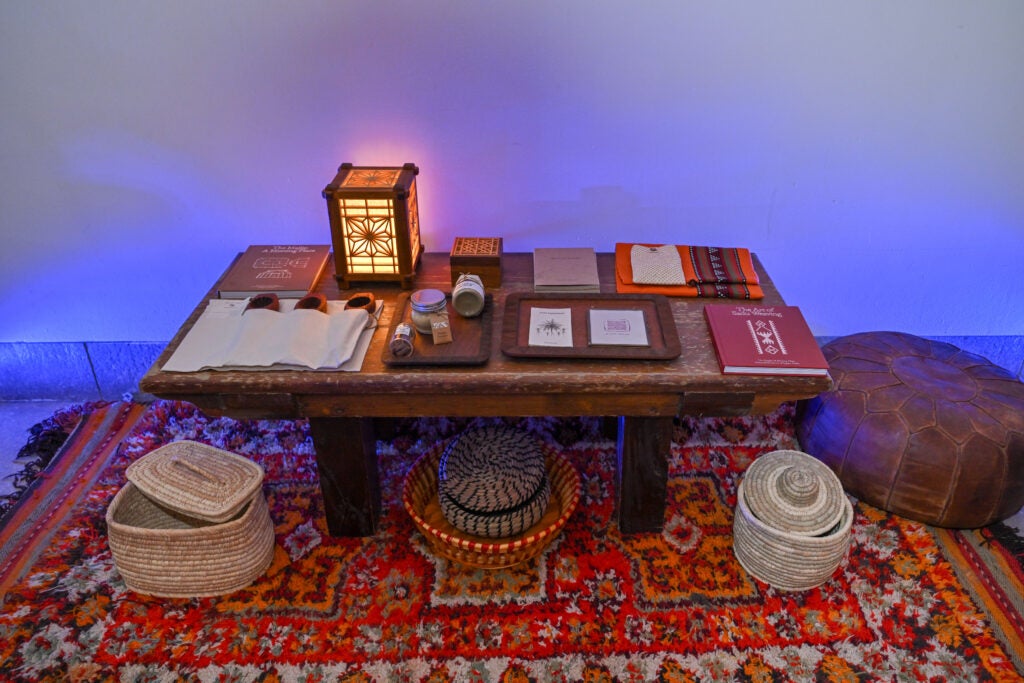
Behind these activities lies a broader ambition: to recover forms of human wisdom that Al Attiyah believes have been marginalized by modern systems of production and construction.
From this perspective, sustainability is not simply about consuming less or introducing greener technologies. It also means recovering knowledge of how earlier societies adapted to their environment — how they built for the climate, managed scarce resources, produced food and developed communities within environmental limits.
The relationship between heritage and sustainability became particularly clear when Al Attiyah was asked about the place of Qatari heritage within Heenat Salma.
He distinguished between heritage understood mainly as national cultural identity and heritage as part of a broader Islamic intellectual and ethical tradition. If Islamic heritage remains a foundational source, he argued, Heenat Salma can help revive inherited knowledge and adapt it to contemporary conditions.
The aim, he said, is not to preserve traditional practices as museum pieces, but to revive, adapt and apply them.
To illustrate the point, Al Attiyah referred to Venice and asked the audience to imagine the city being designed and built from scratch today. Would contemporary construction recreate qualities that developed organically over centuries, or would modern materials, efficiency and standardized planning produce something entirely different?
The example reflected a recurring theme in the discussion: what is lost when progress is measured mainly by speed, efficiency and technological capability?
For Al Attiyah, Islamic heritage offers a different starting point — one that places human beings within, rather than above, the natural order, and links their ability to transform the Earth with a responsibility to protect it.
Heenat Salma is his attempt to give that principle practical form and explore whether the ethical and environmental knowledge embedded in Islamic heritage can help shape a more sustainable model of contemporary life.