Why translation matters in Syrian storytelling after Assad
On Dec. 8, 2024, news of the fall of the Assad regime rippled through the vast Syrian diaspora. There was laughter, there were tears and there was euphoria. But amid the celebrations was a sense of unease. The impossible had happened, but one question remained: What was left of the homeland to rebuild?
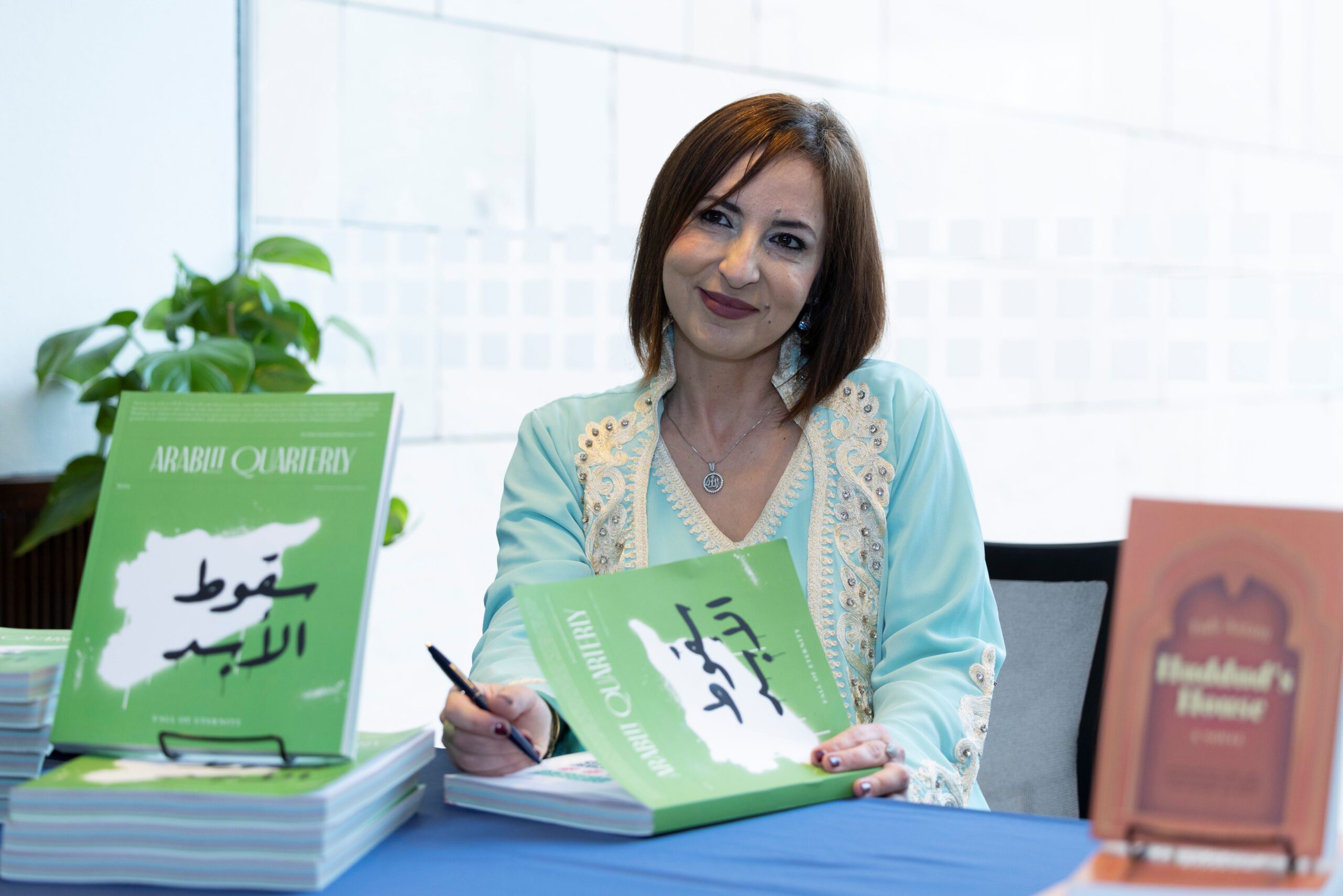
For Syrian Ghada Alatrash, Visiting Assistant Professor of English at Georgetown University in Qatar, who left Syria at age 12 as the daughter of a diplomat, growing up in North America meant reading the truth of her homeland’s ongoing tragedy between the lines of Western commentary. Too often, international coverage reduced the conflict to abstract statistics or catastrophic spectacle, turning a rich culture into a footnote to violence.
“Syrians became refugees, victims, security threats, numbers of casualties—not people at all,” Alatrash said. Measured against her own experience and the living literary traditions she encountered through her work as a translator and scholar of contemporary Arabic literature, that reduction was particularly damaging and dehumanizing.
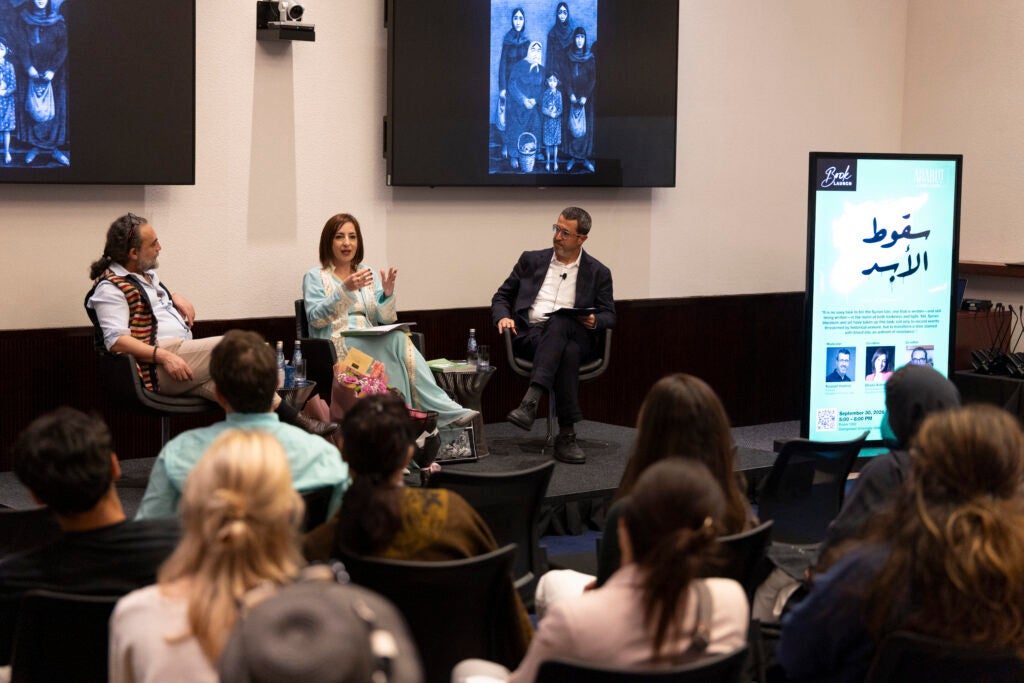
So when the opportunity arose to co-edit a special issue of ArabLit Quarterly dedicated to Syria alongside award-winning Syrian author and poet Fadi Azzam, the assignment felt like a moral imperative: to create a protected space for Syrian voices to tell their own stories.
“We are producers of knowledge about our own country during a period of profound transformation, not just objects of interpretation,” Alatrash said.
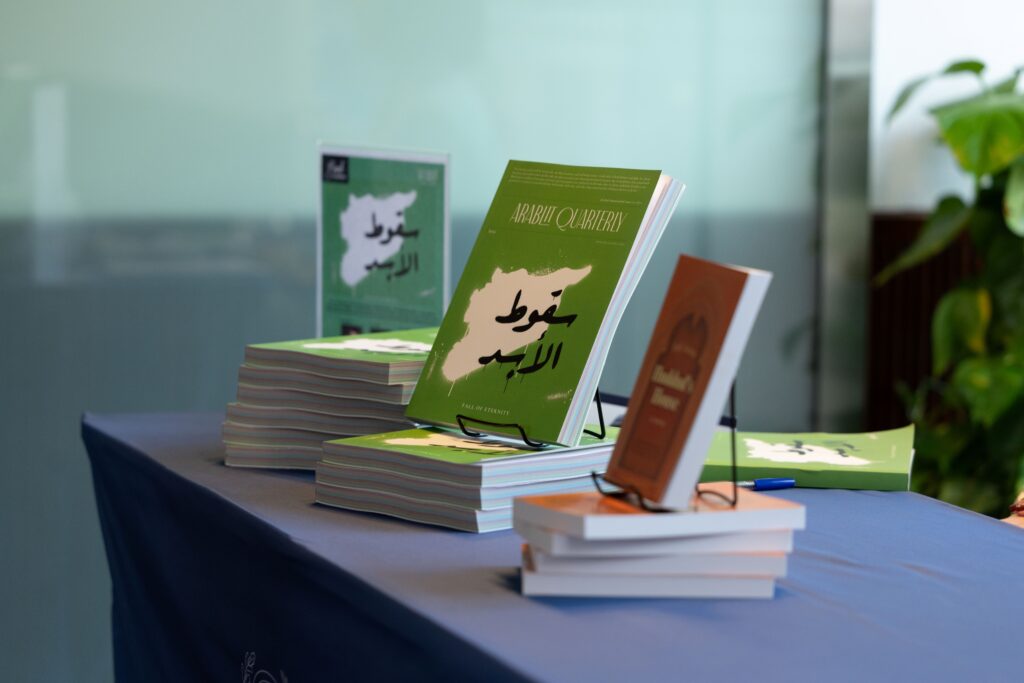
The resulting 300-page volume, titled Syria: The Fall of Eternity, is an archive of artistic resistance. Across its full-color pages, Syrian novelists, poets and visual artists claim agency over their narratives, presenting knowledge rooted in lived experience rather than foreign interpretation.
The result is not a definitive portrait of Syria by Syrians. Instead, it is “a place where these voices could sit beside one another, sometimes in harmony and sometimes in tension, and most importantly, speak for themselves,” Alatrash said. The selections, by both well-known and lesser-known writers, bridge generational divides, political affiliations and different geographic trajectories.
Much of the original material was written in Arabic, requiring a major translation effort led by Alatrash, whose rendering of Azzam’s Huddud’s House earned a 2024 Kirkus Star. She personally translated 12 of the works while coordinating a broader group of translators.
The work, she said, felt “like carrying a fragile object across a border: bringing the text into another language without fracturing its soul, allowing it to inhabit a new linguistic space while preserving the singular resonance that demanded its translation in the first place.”
The volume refuses to let Syria become synonymous with suffering. It reads like an extended conversation among artists, writers, thinkers, mothers, daughters, lovers, political theorists, humorists, historians and dreamers. Arranged chronologically, it maps the changing reality on the ground through writing from prison cells, cities under bombardment and places of exile. In doing so, it preserves names, memories, landscapes, voices and experiences that might otherwise have been erased.
“In every text, every poem, every work of art, there is a brave confession: freedom is not granted—it is seized; it is seized with love, with words, with color, and with a deep conviction that all humans deserve to be free,” Alatrash and Azzam write in their introduction.
“I lived the dream of return, but only for a fleeting moment, which made the contradiction all the more painful,” she said. “Return is not merely a physical journey back across a border. It raises fundamental ethical and political questions: Does a safe, just home exist to return to in the first place?” Alatrash’s words emerge from the shadow of two massacres, one on the Coast in March and the other in her hometown of Suwaida in July 2025.
Ultimately, The Fall of Eternity is concerned with the reconstruction of meaning: rethinking what citizenship, belonging and justice mean for Syria today. Literature cannot single-handedly rebuild a state, Alatrash notes, but “it can cultivate the imaginative space in which the vital questions of nationhood, equality, and restoring humanity can finally be asked.”
By bringing together voices young and old, who experienced the regime and its aftermath from near and far, the anthology brings readers into conversation with Syrian writers. It also reflects the pedagogical philosophy Alatrash brings to her classrooms at Georgetown: reading as an encounter with another human presence.
The student is no longer studying an event from a distance, they are confronting another human life. And perhaps that is where true learning begins.
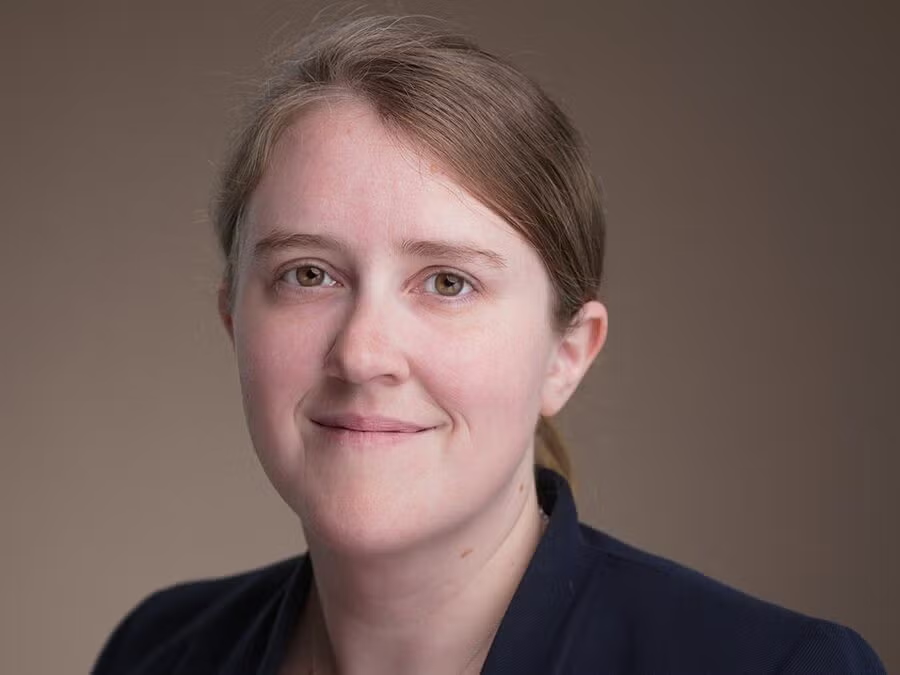
Ghada Alatrash
Why translation matters in Syrian storytelling after Assad
Why translation matters in Syrian storytelling after Assad
On Dec. 8, 2024, news of the fall of the Assad regime rippled through the vast Syrian diaspora. There was laughter, there were tears and there was euphoria. But amid the celebrations was a sense of unease. The impossible had happened, but one question remained: What was left of the homeland to rebuild?
For Syrian Ghada Alatrash, Visiting Assistant Professor of English at Georgetown University in Qatar, joy quickly gave way to mourning as Syrians began searching for loved ones, finding family members dead and confronting a new wave of violence. “The laughter became screams of horror. The ecstasy of liberation collided with massacres and bloodshed.”
Alatrash left Syria at age 12 as the daughter of a diplomat. Growing up in North America meant reading the truth of her homeland’s ongoing tragedy between the lines of Western commentary. Too often, international coverage reduced the conflict to abstract statistics or catastrophic spectacle, turning a rich culture into a footnote to violence.
“Syrians became refugees, victims, security threats, numbers of casualties—not people at all,” Alatrash said. Measured against her own experience and the living literary traditions she encountered through her work as a translator and scholar of contemporary Arabic literature, that reduction was particularly damaging.
So when the opportunity arose to co-edit a special issue of ArabLit Quarterly dedicated to Syria alongside award-winning Syrian author and poet Fadi Azzam, the assignment felt like a moral imperative: to create a protected space for Syrian voices to tell their own stories.
“We are producers of knowledge about our own country during a period of profound transformation, not just objects of interpretation,” Alatrash said.
The resulting 300-page volume, titled Syria: The Fall of Eternity, is an archive of artistic resistance. Across its full-color pages, Syrian novelists, poets and visual artists claim agency over their narratives, presenting knowledge rooted in lived experience rather than foreign interpretation.
The result is not a definitive portrait of Syria by Syrians. Instead, it is “a place where these voices could sit beside one another, sometimes in harmony and sometimes in tension, and most importantly, speak for themselves,” Alatrash said. The selections, by both well-known and lesser-known writers, bridge generational divides, political affiliations and different geographic trajectories.
Much of the original material was written in Arabic, requiring a major translation effort led by Alatrash, whose rendering of Azzam’s Huddud’s House earned a 2024 Kirkus Star. She personally translated 12 of the works while coordinating a broader group of translators.
The work, she said, felt “like carrying a fragile object across a border: bringing the text into another language without fracturing its soul, allowing it to inhabit a new linguistic space while preserving the singular resonance that demanded its translation in the first place.”
The volume refuses to let Syria become synonymous with suffering. It reads like an extended conversation among artists, writers, thinkers, mothers, daughters, lovers, political theorists, humorists, historians and dreamers. Arranged chronologically, it maps the changing reality on the ground through writing from prison cells, cities under bombardment and places of exile. In doing so, it preserves names, memories, landscapes, voices and experiences that might otherwise have been erased.
“In every text, every poem, every work of art, there is a brave confession: freedom is not granted—it is seized; it is seized with love, with words, with color, and with a deep conviction that all humans deserve to be free,” Alatrash and Azzam write in their introduction.
In addition to her editorial and translation work, Alatrash contributed a personal essay about her fraught return to her family’s home in Suwaida in April 2025, just months before the area became the site of a devastating massacre.
“I lived the dream of return, but only for a fleeting moment, which made the contradiction all the more painful,” she said. “Return is not merely a physical journey back across a border. It raises fundamental ethical and political questions: Does a safe, just home exist to return to in the first place?”
Ultimately, The Fall of Eternity is concerned with the reconstruction of meaning: rethinking what citizenship, belonging and justice mean for Syria today. Literature cannot single-handedly rebuild a state, Alatrash notes, but “it can cultivate the imaginative space in which the vital questions of nationhood, equality, and restoring humanity can finally be asked.”
By bringing together voices such as Samar Yazbek, George Kadr, Mamdouh Azzam, Maha Hassan and Dima Wannous, the anthology brings readers into conversation with Syrian writers. It also reflects the pedagogical philosophy Alatrash brings to her classrooms at Georgetown: reading as an encounter with another human presence.
“The student is no longer studying an event from a distance,” she said. “They are confronting another human life. And perhaps that is where true learning begins.”