Inside Georgetown Qatar classrooms as war reshaped teaching in real time
At Georgetown University in Qatar, classrooms hold steady as regional conflict moves into daily academic life
Early in the morning of Feb. 28, 2026, Dr. Raha Hakimdavar woke to a jarring emergency alert on her phone. “Security threat elevated, everyone is required to remain indoors.”
When she turned on the news, reports of Iran under attack filled the screen, alongside a steady stream of alarming posts on social media. Her mother had flown in from Tehran the night before, but Dr. Hakimdavar immediately had to focus on adjusting her course plan. Within hours, the course she teaches, Desert Futures, funded by a Qatar Foundation multiversity grant, no longer held in the same form.
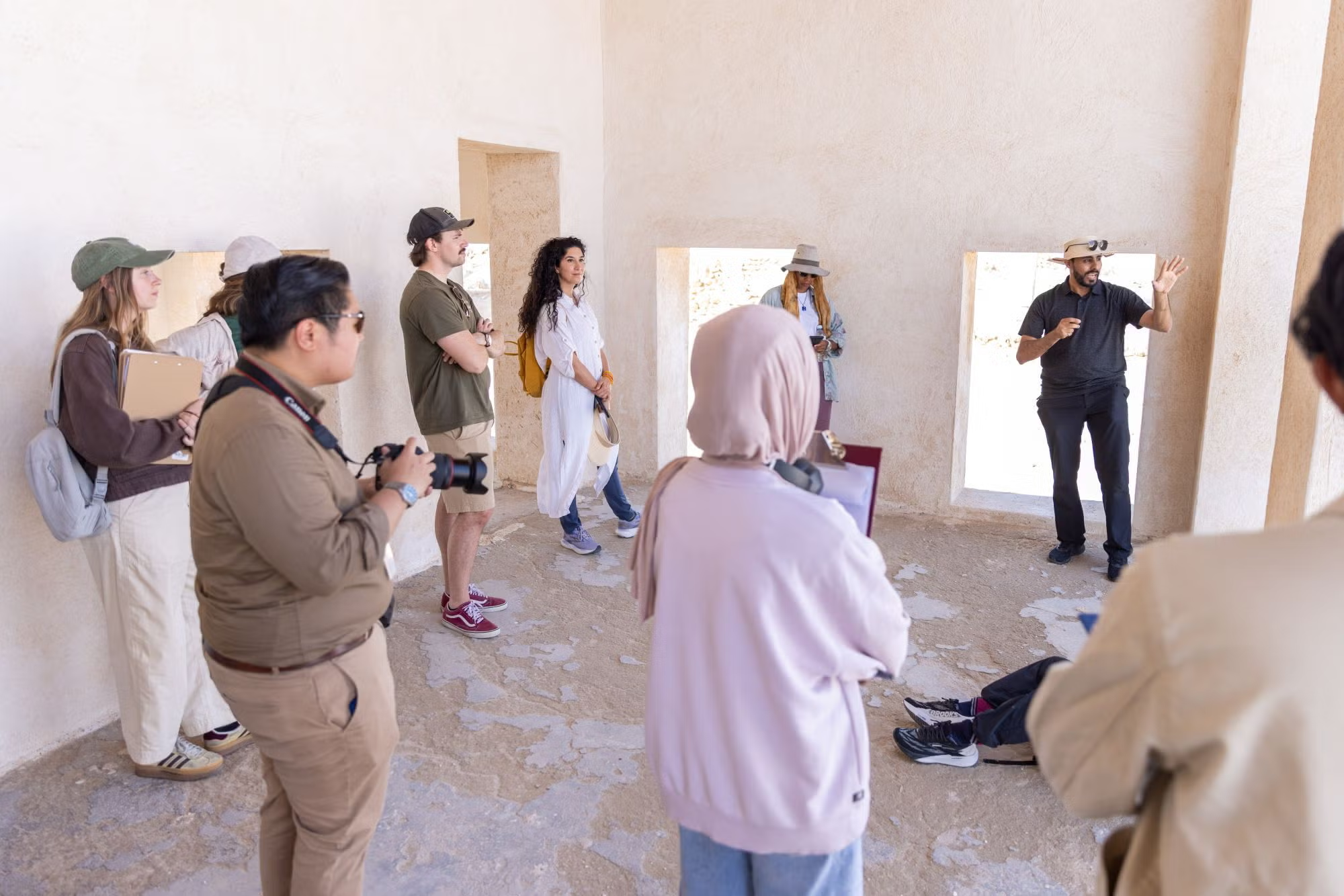
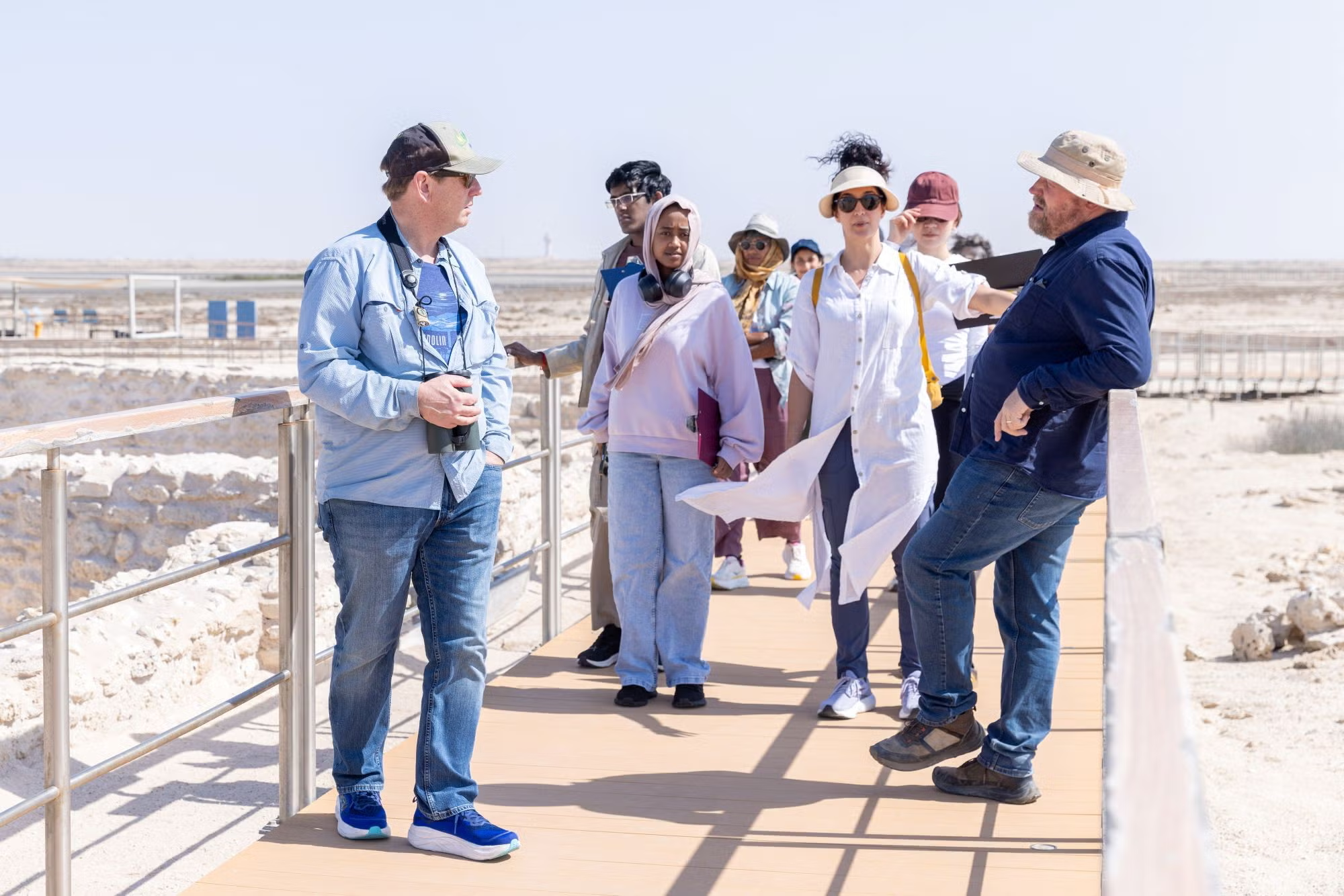
What had started as a class on environmental change in arid regions for students at GU-Q and other Education City universities quickly became something more immediate. As the war unfolded, the course turned into a space to work through how conflict and environmental systems intersect in real time, with discussions shifting toward questions of damage, disruption, and impacts much closer to home.
“My students began reflecting on the environmental toll of the conflict, especially on ecosystems and areas that are rarely considered in moments like this,” she said. “It allowed us to make a very tangible connection between war and environmental consequence.”
Across GU-Q, faculty adjusted as conflict moved from headlines into classrooms and seminars.
In Dr. Mehran Kamrava’s Comparative Politics courses, many students came from war-torn countries across the region. While those experiences were central, he pushed them to separate identity from analysis, even as both continued to shape the discussion.
“I say our job is to engage in the science of politics rather than politics,” he said. “The volatile environment around us drives that point home.”
In some cases, lessons in the classroom coincided with timely real-life events.
“The night of President Trump’s threat to end civilization in Iran, our assigned reading, chosen weeks in advance, was a study of whether U.S. presidents would really use nuclear weapons,” said Dr. Paul Musgrave, who teaches Nuclear Weapons and World Politics.
For Dr. Gabor Scheiring, who teaches Comparative Politics and research methods, the challenge was maintaining structure while acknowledging disruption.
“The stories of arduous cross-country relocations and midnight evacuations were hard to digest,” he said. “Early on I decided student emotional and physical safety came first, but I kept the course structure intact to maintain familiarity.”
Throughout all this, students leaned on faculty to interpret what was unfolding. Read more about student perspectives on the war here.
Across classrooms, faculty described a shift in teaching under pressure. Teaching was no longer just about delivering material, but also about making space for interpretation as events unfolded in real time.
“Many students have lived realities and experiences that speak directly to, and challenge, a lot of the ideas and concepts that we teach,” said Dr. Noha Aboueldahab, who teaches international law and transitional justice. “GU-Q is not just an American institution, but a global one that foregrounds multiple worldviews and realities in both Qatar and the GCC and beyond.”
She added that this dynamic is also reflected in how students engage with material.
“They are less willing to accept tidy frameworks and more demanding of honesty about power, interests, inconsistency, and Western hypocrisies,” she said.
For Dr. Hakimdavar, the change in the classroom also reflects a broader intellectual reorientation shaped by geography and experience. Having worked previously in the U.S. government, she described the contrast as immediate.
“In the U.S. government, the lens is naturally U.S. national interest,” she said. “Being based in Qatar has given me a visceral understanding of what it means to live with real water, food security, and environmental resource constraints. It shapes the questions we ask and the urgency with which we pursue them.”
Outside the classroom, GU-Q scholarship and policy work have also extended learning beyond those enrolled in these courses. Faculty and alumni are drawing on a liberal arts education rooted in the region to produce analysis and policy perspectives shaped by the conflict.
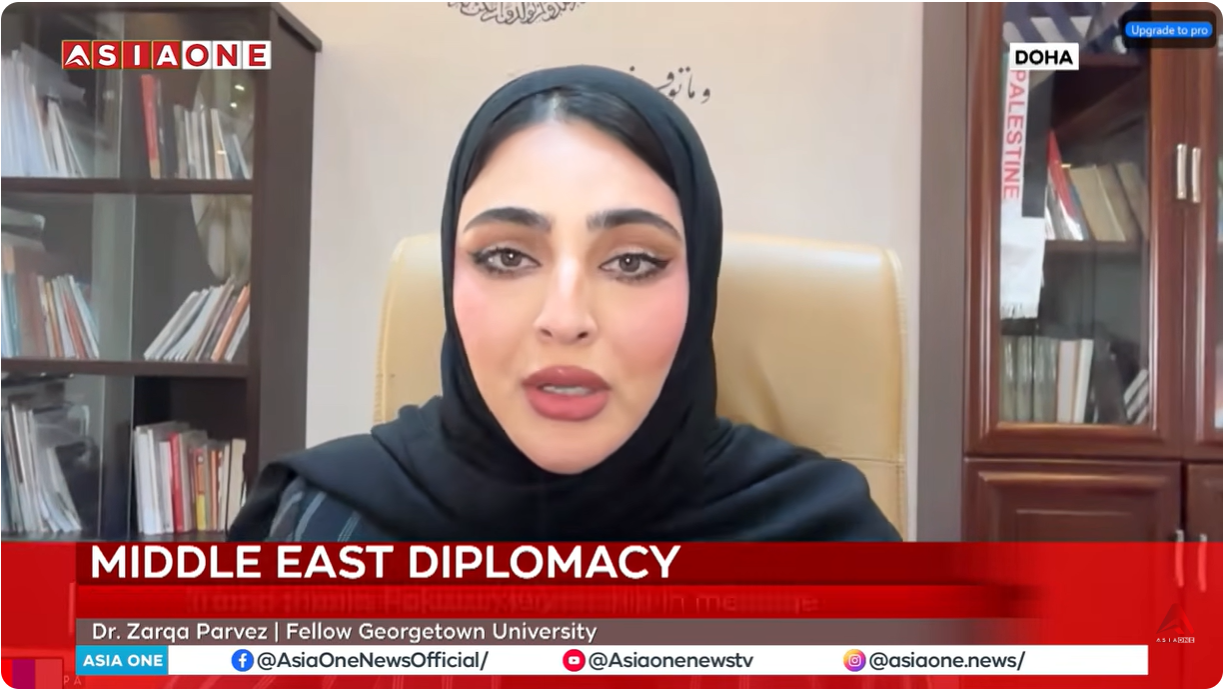
For example, alumna and GU-Q postdoctoral fellow Dr. Zarqa Parvez (GU-Q’13) has offered insight into local political sentiment, including reactions to the first attacks and Pakistan’s role in the ceasefire.
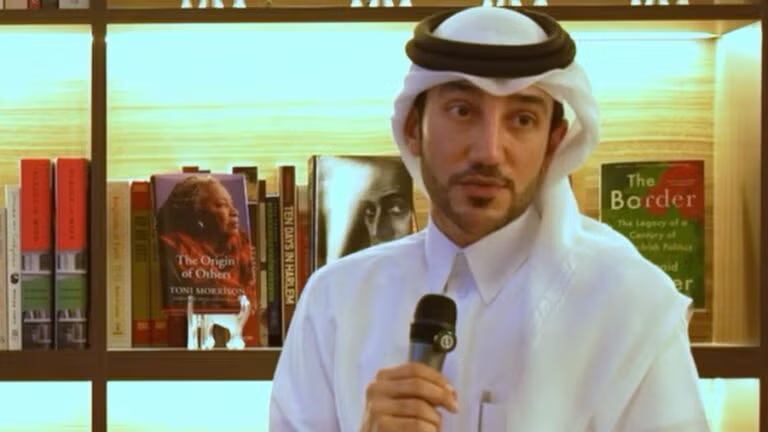
Dr. Khalid Al Jufairi (GU-Q’09), an adjunct professor at GU-Q and Khaleeji Fellow at the Fikr Institute, has published policy briefs on Gulf politics examining why states in the region diverge in their hedging strategies. Read more on how faculty scholarship has informed the news cycle here.
Students have engaged deeply with the learning opportunities faculty have created across classrooms, in media, and through policy work. Those experiences have strengthened their connection to the institution.
“Georgetown’s mission and its insistence that education is always in service of something larger has not wavered, not even in the middle of all of this,” said Dania Muhsen, Class of 2028. “If anything, the disruption has clarified for me why I chose this institution. GU-Q was not built for easy times. It was built for exactly this: to train people to think clearly when clarity is the hardest thing to find.”
Read More:
Filed under
Read More
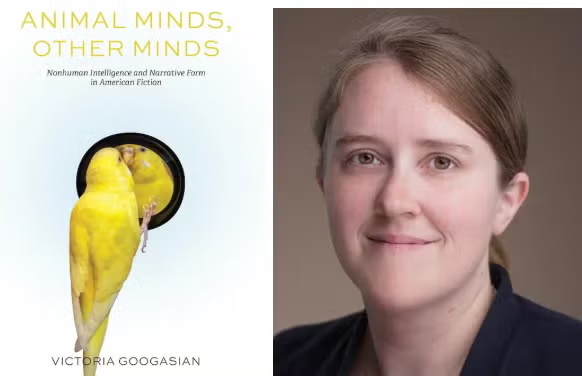
Can fiction about animal minds help us bridge the human divide? This professor thinks so.
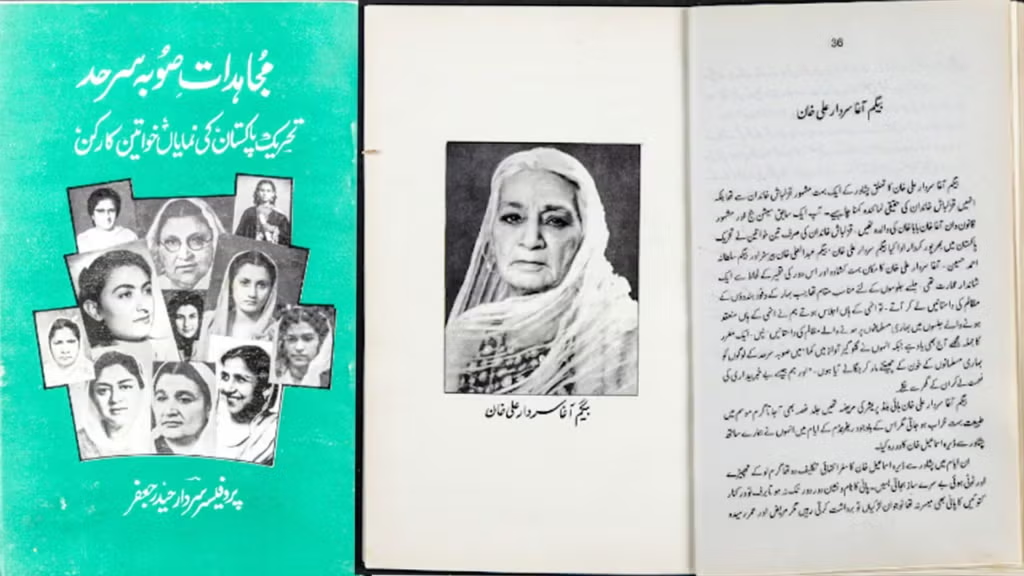
A region is more than its headlines: Preserving the history of the Afghanistan-Pakistan frontier