Zahra Babar earns prestigious fellowship to bring Gulf migrant voices to the global conversation
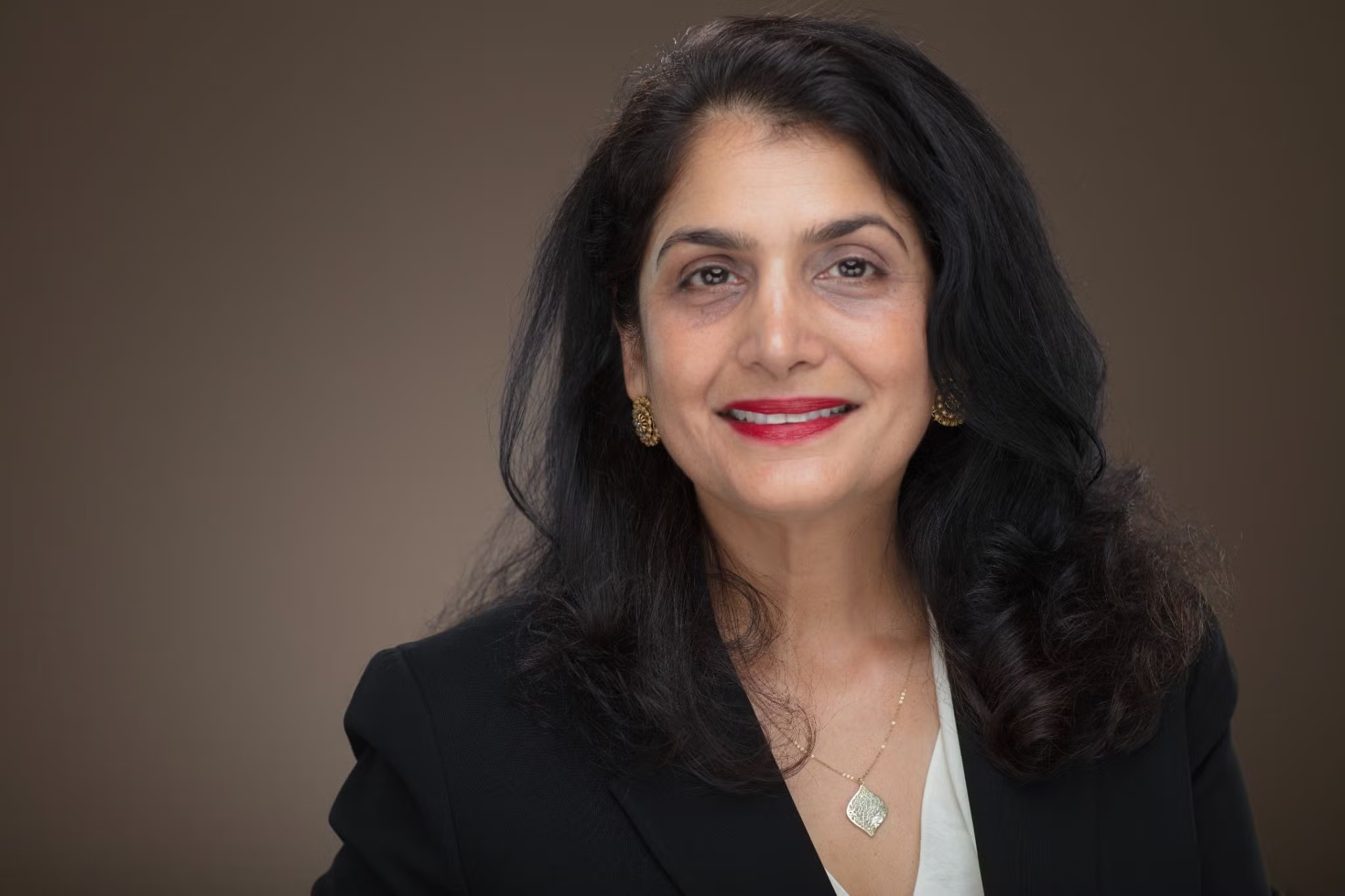
Zahra Babar, executive director of GU-Q’s Center for International and Regional Studies, has been selected for the prestigious CERC Scholars of Excellence program at Toronto Metropolitan University’s Global Migration Institute.
The fellowship recognizes Babar’s work advancing our understanding of migration, labor, citizenship and mobility in the Gulf. Her work sees the region as an important place for generating new questions and perspectives on migration, labor and citizenship. It will also give her a platform to expand that work and bring perspectives from the region into global conversations about migration.
Babar will continue work on an ongoing project she leads on migrant voices and experiences in Qatar. She will also explore how oral histories, digital storytelling and other forms of public-facing research can complement and extend conventional academic scholarship. Her fellowship will build on her research, with particular attention to the racialized hierarchies that shape migrant labor and the ways states govern and differentiate migrant populations.
Overall, through the fellowship, she will continue putting migrant experiences at the center of her work while finding new ways to challenge established assumptions and make research accessible beyond the academy.
“Zahra Babar is one of the world’s leading scholars on migrant labor issues,” said Acting Dean Clyde Wilcox. “Her work in collecting the voices of migrant workers in Qatar led to a wonderful podcast series at CIRS and her scholarship helps establish GU-Q as an institution that cares about migrant workers.”
The CERC Scholars of Excellence program is part of the Canada Excellence Research Chairs program, supported by the Government of Canada and Toronto Metropolitan University. It supports research on migration and integration, including forced and voluntary mobility, internal and international migration, post-migration processes and the role of countries of origin and transit.
At CIRS, Babar leads interdisciplinary research on the Gulf, the Middle East, neighboring countries and the Global South. She has published more than 40 scholarly articles and book chapters and led collaborative and public-facing projects documenting migrant experiences in Qatar. She also mentors students and early-career researchers and builds connections among scholars studying migration across regions and disciplines.
Before joining GU-Q, Babar worked in humanitarian aid and development, including with the International Labour Organization and the United Nations Development Programme. That experience continues to shape her interest in connecting academic research with policy and practice.
For GU-Q, the fellowship recognizes both Babar’s scholarship and the work she has led at CIRS, bringing perspectives from the Gulf into wider conversations about migration, labor, citizenship and belonging.
Filed under