Art as History, Art as Future: Sudan Retold at Georgetown’s Seeing Sudan Conference
At Georgetown University in Qatar’s Seeing Sudan Hiwaraat conference, art was not ornament but testimony—memory stitched into color, fantasy sharpened into line. Over three days, artists, musicians, and thinkers explored the interlacing of art and politics, of history and imagination.
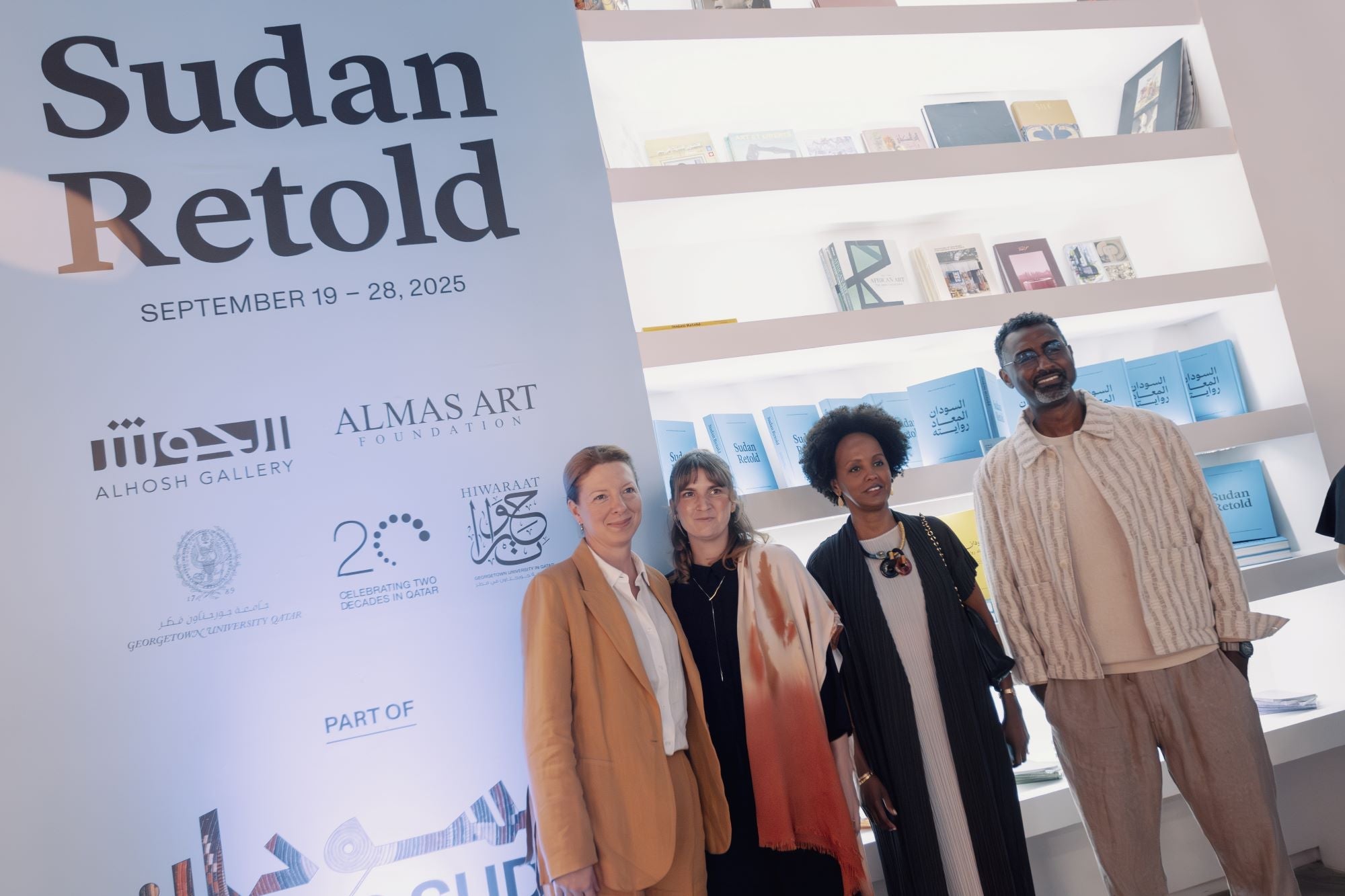
At the heart of the gathering was the exhibition and book launch of Sudan Retold, a groundbreaking art project curated by Sudanese cartoonist and GU-Q Artist-in-Residence Khalid Albaih. Inside the Alhosh Art Gallery, visitors were met with a chorus of works: comic book heroes, abstract canvases, photographs, and installations that remade Sudan’s story in tactile fragments. A performance filled the gallery with music, lifting the weight of history into song.
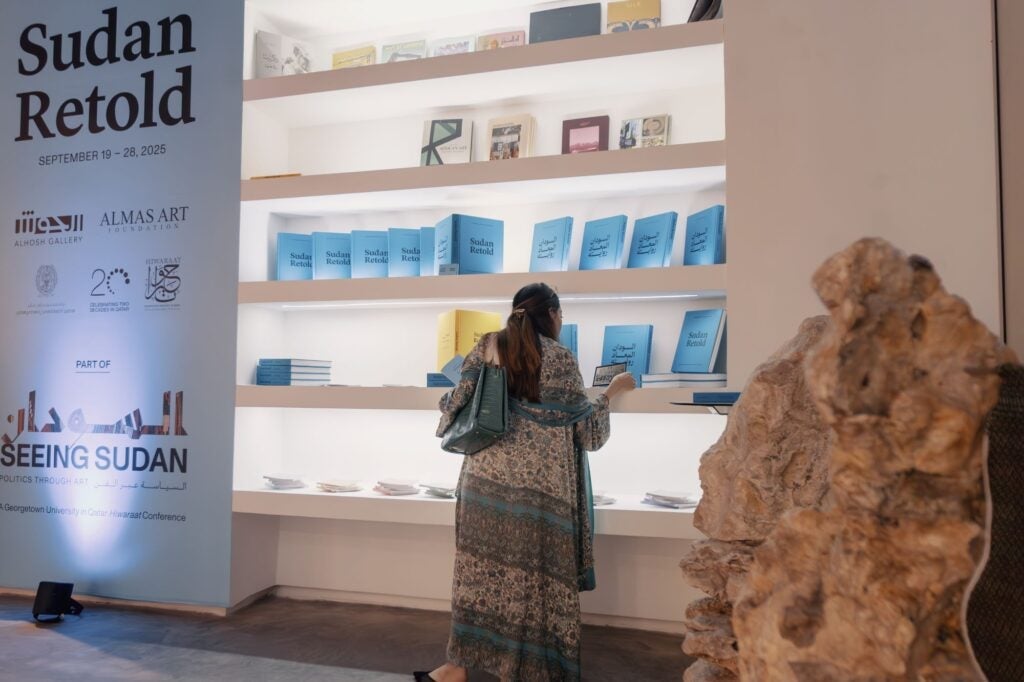
Sudan Retold book display
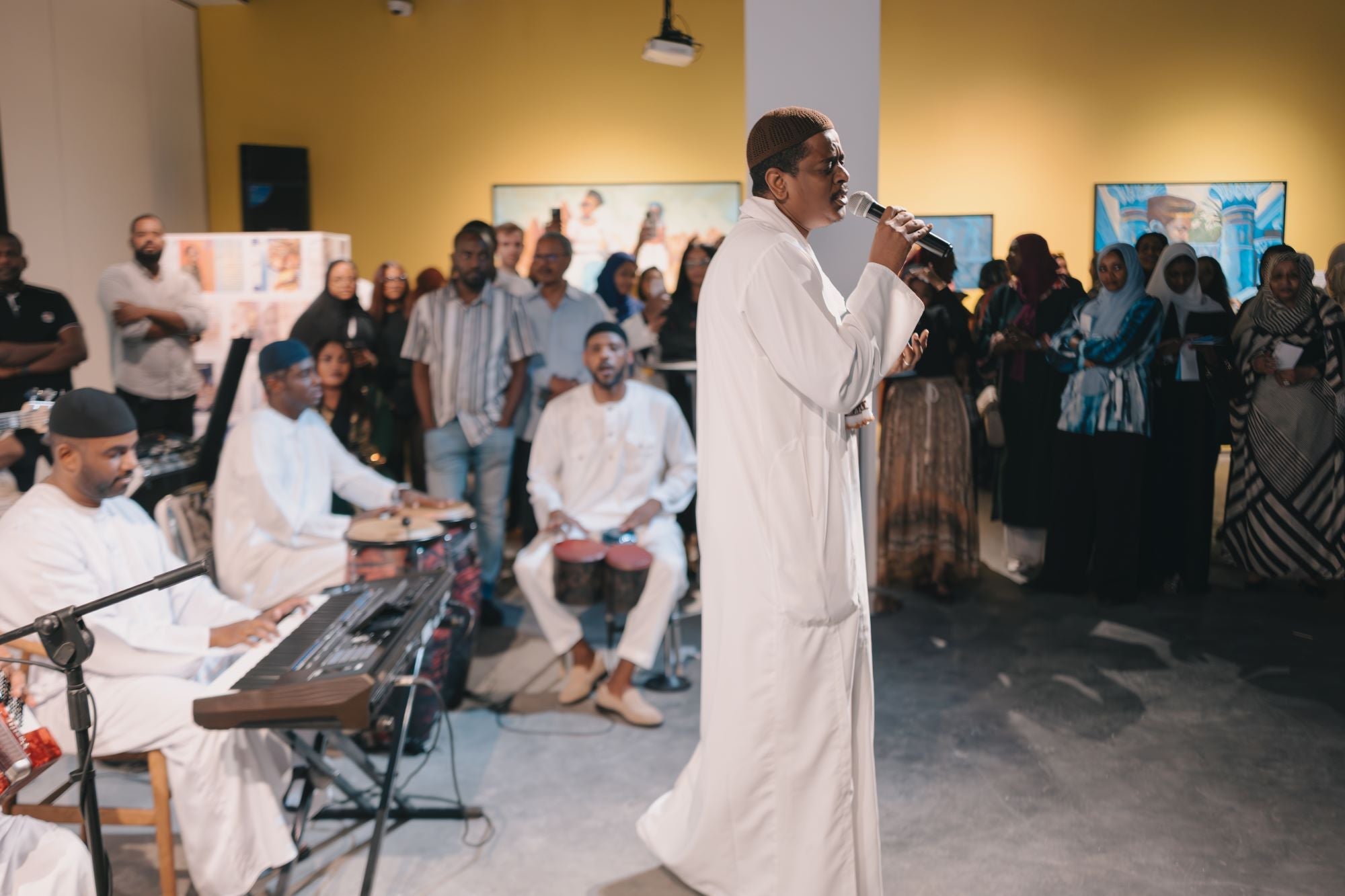
photos of musicians in the gallery
Unlike the cold shelves of an archive, the exhibition spoke through the hands of artists young and old—illustrators, filmmakers, designers, cooks—whose imaginations conjured both the fractured past and the future still possible.
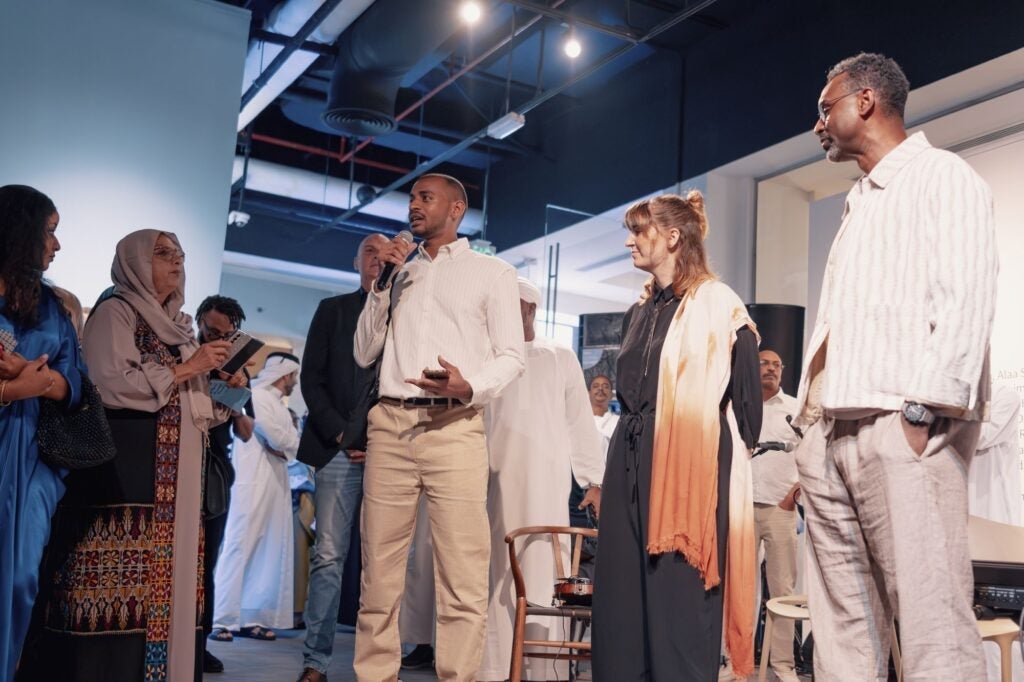
“We all have our own ways of explaining what Sudan is… This book is about imagination. It’s about fantasy. It’s about creating a version of Sudan that is personal to each and every one of these artists,” said cultural researcher and exhibition co-curator Rahiem Shaddad.
Photo of Rahiem speaking
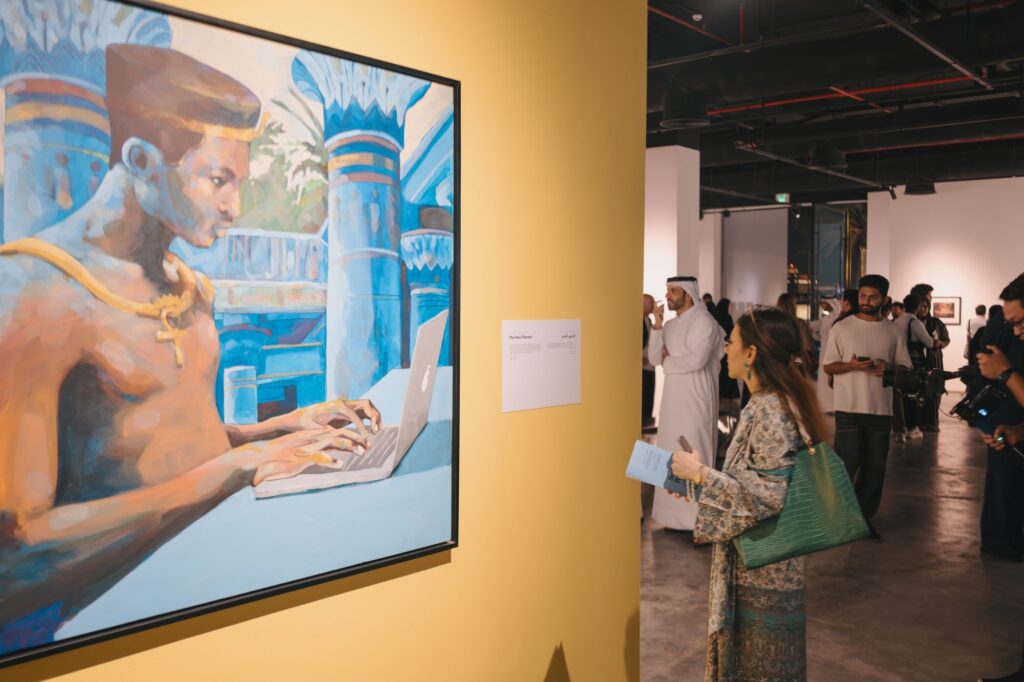
The pieces pulsed with urgency. A superheroine, Candik, stood tall, inspired by the Nubian queens of Meroe; The New Pharaoh series rewrote colonial history with a sharp defiance. Draped thobes whispered the legacy of women’s wear, while a corner for coffee drew visitors into Sudan’s rhythms of gathering and pause. The gallery became a living dialogue between heritage and invention, between mourning and celebration.
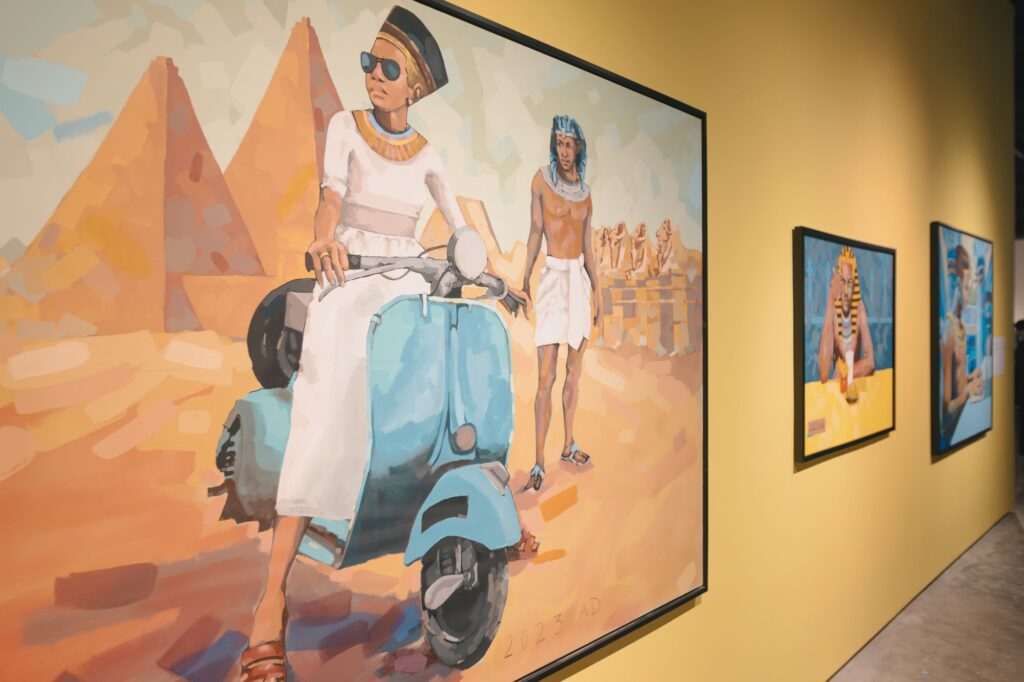
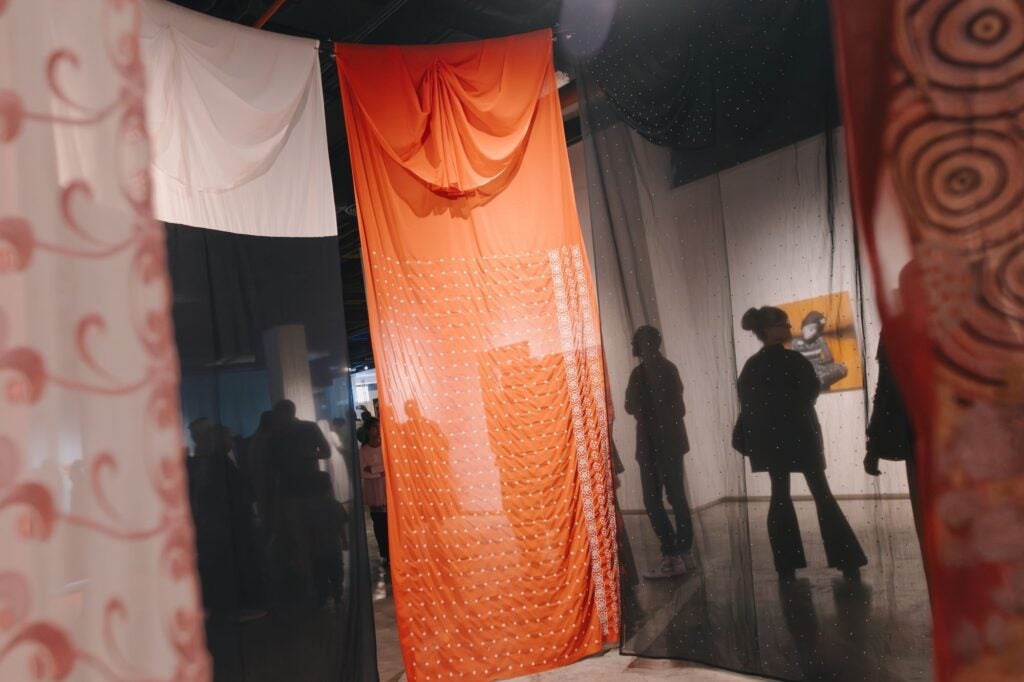
For Albaih, Sudan Retold was, in his words, “a selfish attempt to form a mental image of Sudan by tapping into other artists’ memories.” Those memories—scattered, intimate, and collective—came alive on the walls. Yet their creators were absent. “Who is missing right now are the artists in this room, barely any of them are here, and I want to dedicate this moment to them… while their art can travel, the artists can’t. They are trapped in Egypt, they are trapped in Sudan unable to travel,” noted co-curator Larissa-Diana Fuhrmann of the Peace Research Institute.
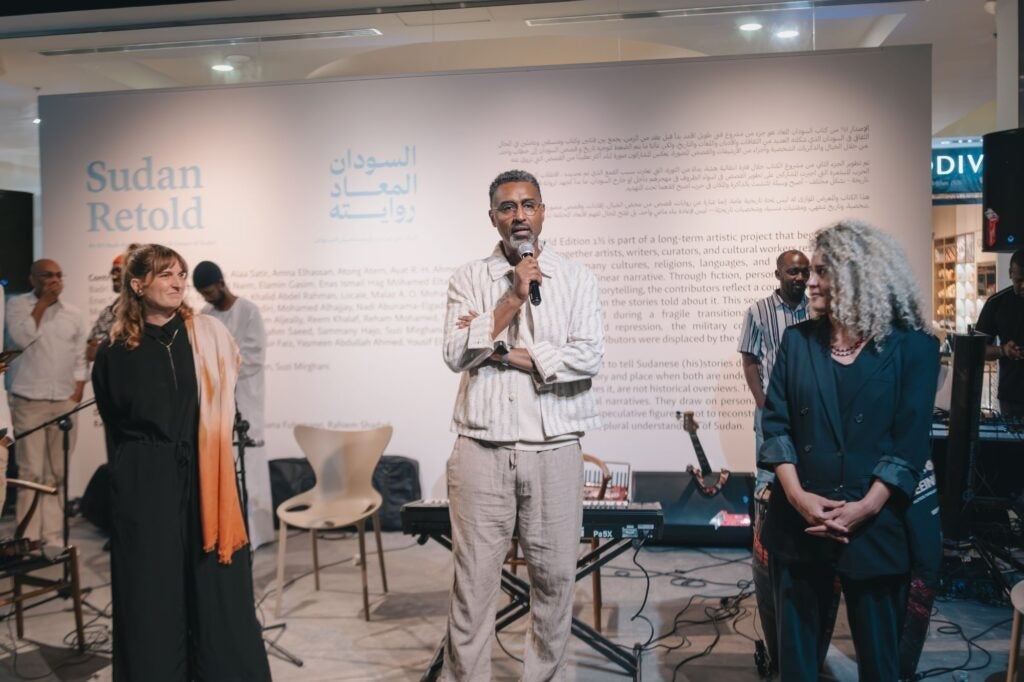
Photo of Larissa-Diana and Khalid Albaih
Music threaded through the conference as well. Sudanese singer Alsarah, joined by Palestinian musician Huda Asfour, reimagined songs from Sudan’s revolutionary past in a haunting performance. “Music has been an integral part of human rituals from healing, mourning, and death. It is an integral part of how we mark the passage of events… it’s not about impressing others but about expressing yourself and saying, ‘I exist,’” Alsarah reflected. Her words recalled a truth: art is not produced from loss, but from deep, inherited, and sustaining currents.
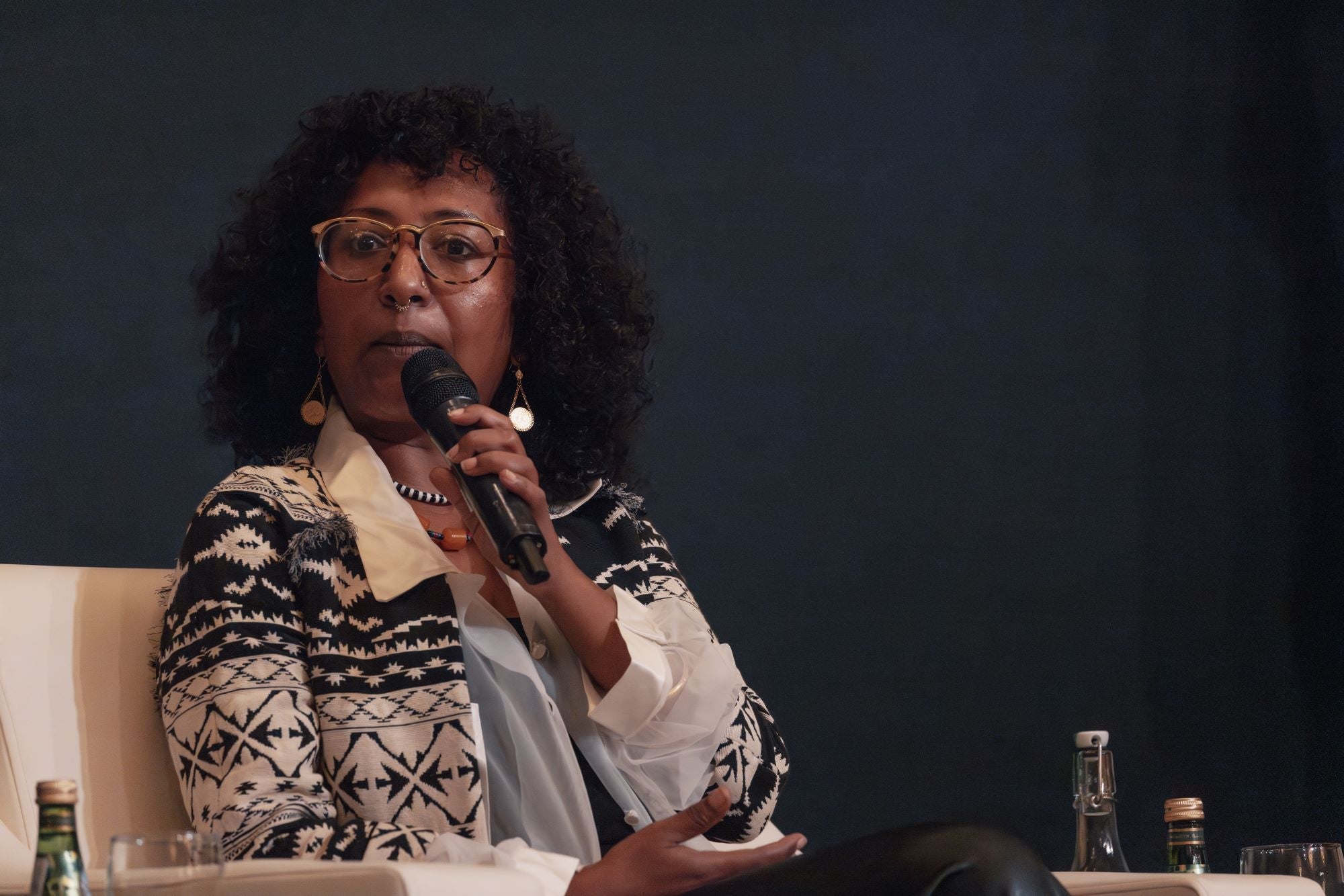
Alsarah on Sound of Sudan panel
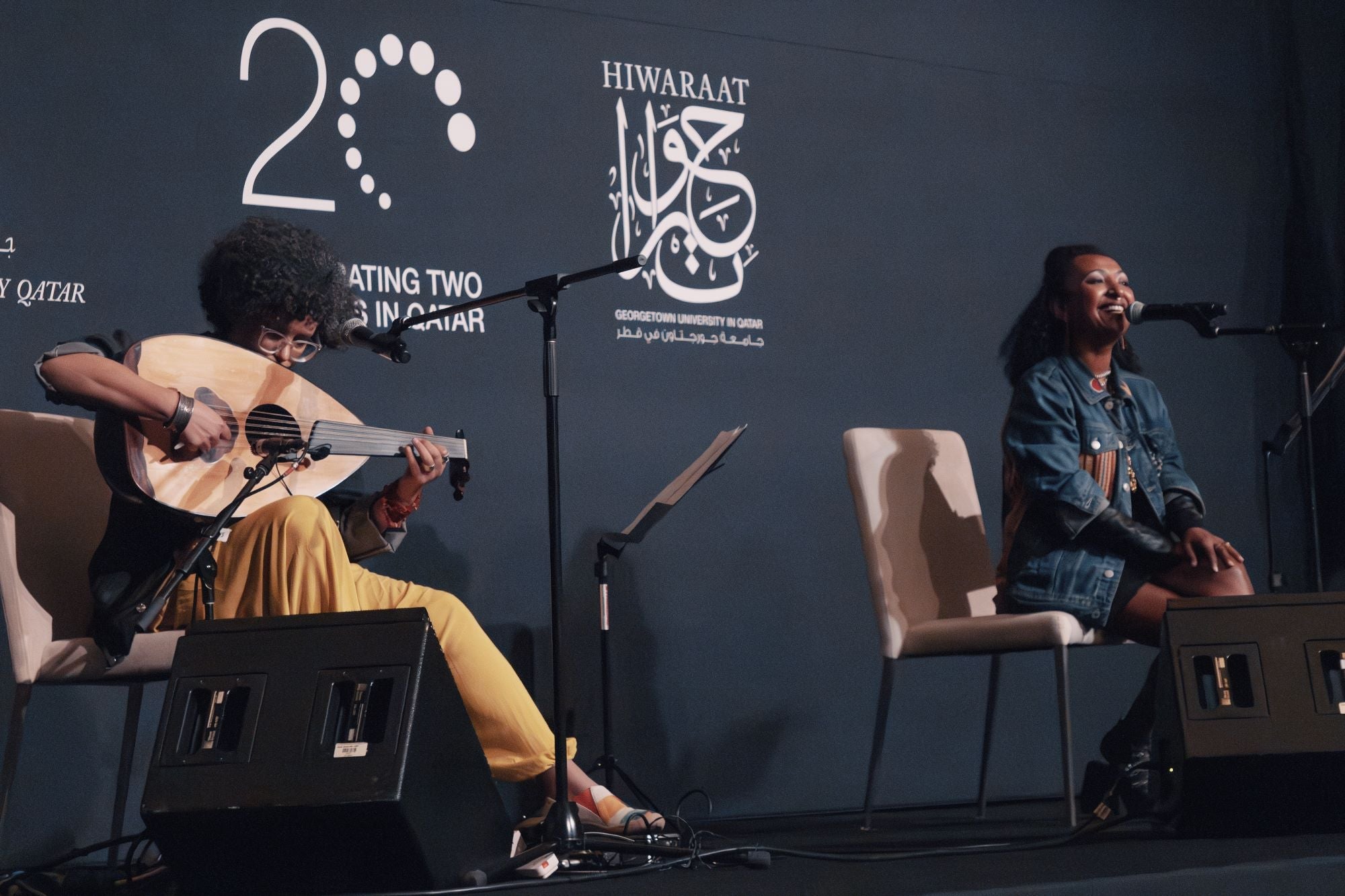
photo of performance
After its Doha debut, Sudan Retold will travel to London, carrying with it the textures of Sudan’s imagination—urgent, luminous, and uncontainable.
Filed under