From São Paulo to Port-au-Prince: How students from the Americas found their place and purpose in Doha
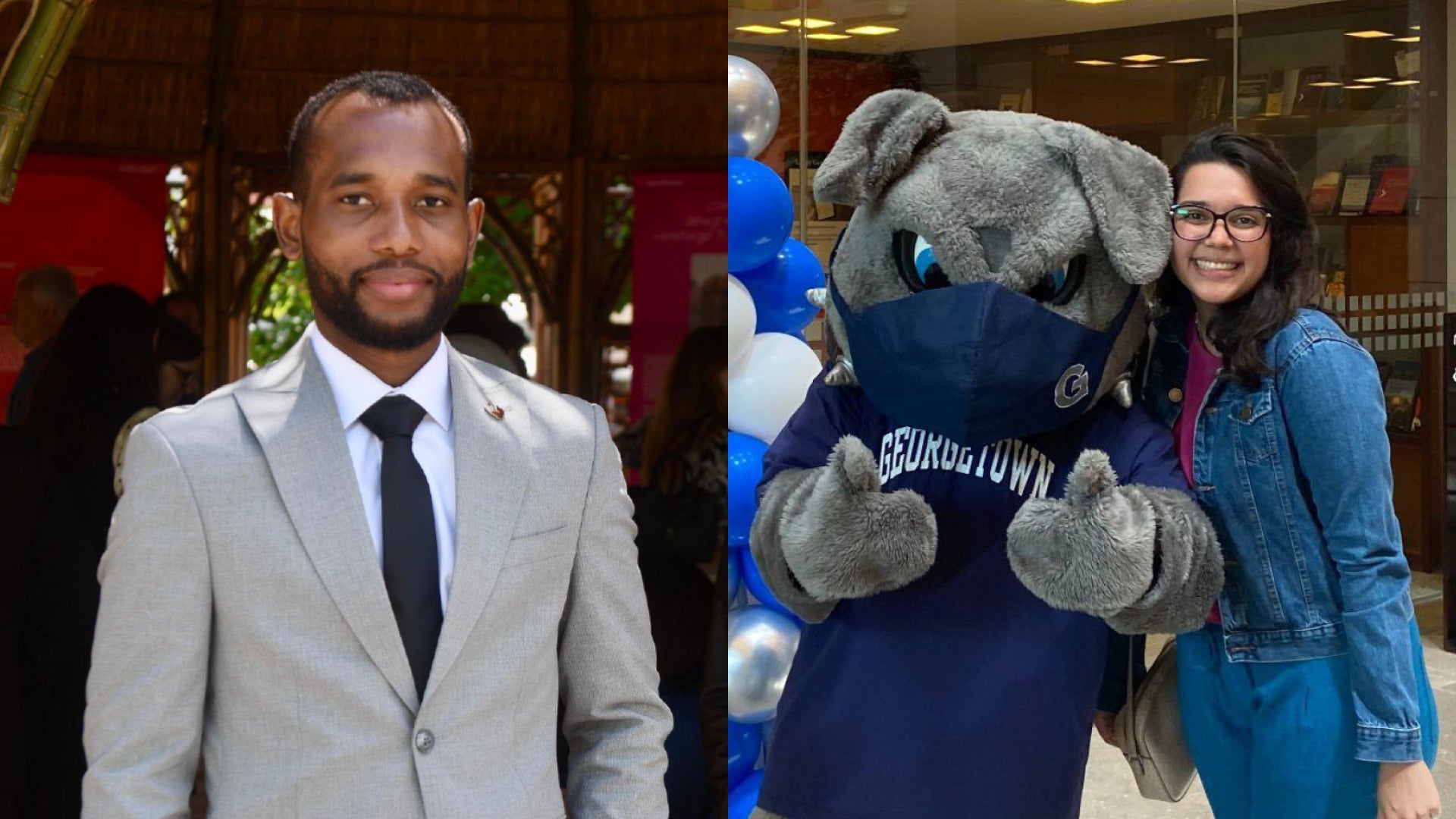
They came from opposite ends of the Americas, one from the sprawling metropolis of São Paulo, the other from the politically charged streets of Port-au-Prince. What brought them both to a small campus in the Arabian Gulf was a shared instinct: that the world was larger than where they had started and that they were meant to engage it fully. At Georgetown University in Qatar, Mariana Pereira de Souza and Wilbert Fils Pierre Louis did exactly that.
Mariana Pereira de Souza | Brazil | Culture & Politics, French Minor
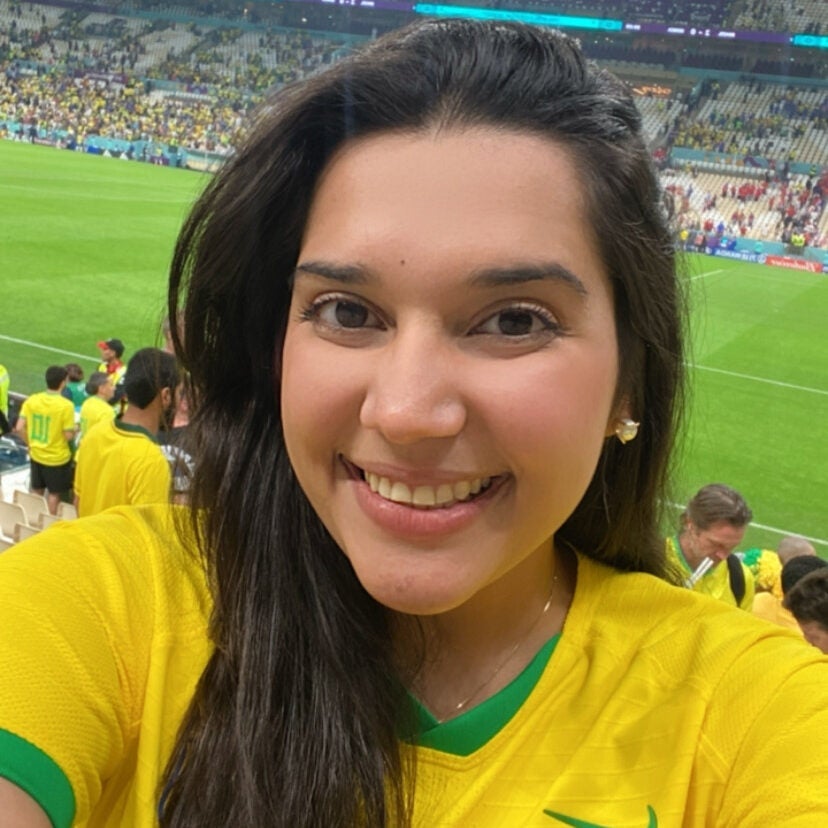
Supporting Brazil during the FIFA World Cup 2022
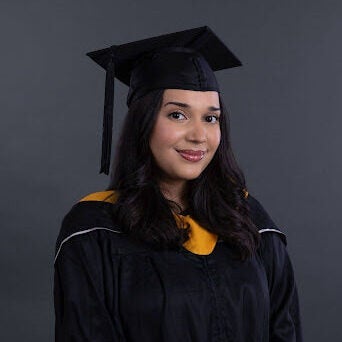
Graduation Portrait
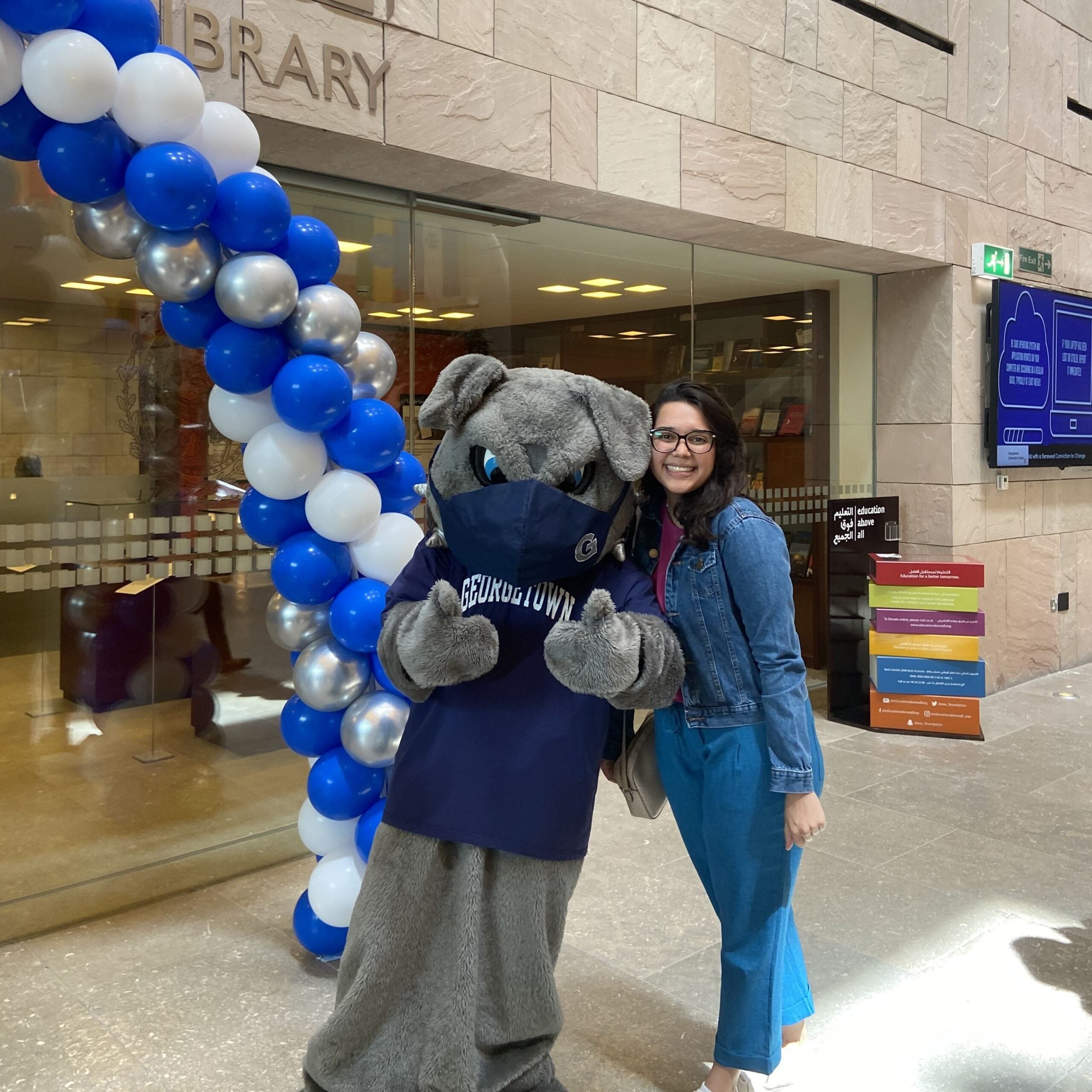
With the Georgetown mascot Jack the Bulldog
Mariana arrived in Doha carrying a philosophy her parents had given her: “see in every situation a potential learning, in every person a potential friend, and in every place a potential home.” Georgetown, it turned out, was built for exactly that kind of openness.
Drawn to GU-Q by the rare opportunity to experience genuine cultural diversity within a single country, she chose Culture and Politics as her major, the perfect lens for a student whose deepest interests sit at the intersection of heritage, identity, and global influence. She became the only student in her cohort to complete honors in the major, with a thesis examining the cinematic reinvention of heritage in global luxury fashion, delving into the strategic ways that culture can shape the future.
Qatar gave her the room to test that conviction in practice. As co-president of the Latin American and Caribbean Society, she built platforms for representation that extended well beyond her own community, organizing events that brought Qatar’s Latin American ambassadors directly into conversation with students. A Greek symposium took her research across the Cycladic islands, where she learned that “meaningful learning happens when you engage directly with communities, your work must also be useful to the people it concerns.” An invitation to join Sheikha Al Mayassa bint Hamad bin Khalifa Al Thani at the Venice Architecture Biennale for the unveiling of Qatar’s national pavilion brought that lesson to its highest expression witnessing firsthand “how culture operates as a form of global dialogue and influence.”
Now building toward a career in cultural diplomacy and strategy in Doha, Mariana reflects on what these four years ultimately gave her. “Studying abroad was a dream I carried with me for a long time, and living it at GU-Q has been transformative. The person I am today is the result of the people I met, the places I experienced, and the opportunities I embraced.”
Wilbert Fils Pierre Louis | Haiti | Culture & Politics
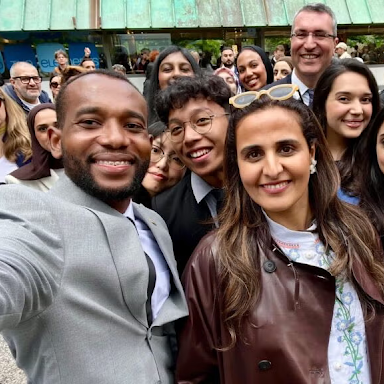
Selfie with Sheikha Mayassa bint Hamad bin Khalifa Al Thani, Mariana (r) and other students in Venice
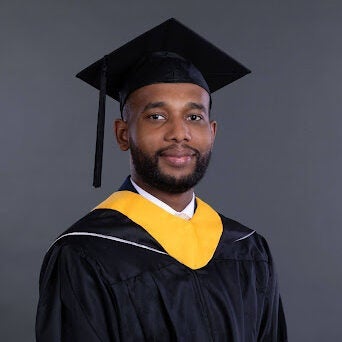
Graduation Portrait
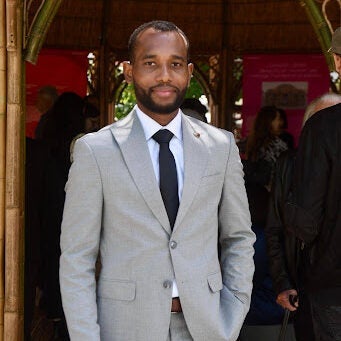
At the Qatar Pavilion, Venice Biennale
Wilbert grew up in a country where political awareness was not a choice. Classes often ended early because of protests. “It was normal for dinner conversations to debate Haiti’s fate,” he recalls. That attentiveness to political and cultural currents became the foundation of everything he would build at GU-Q.
He chose a campus as politically alive as the country he came from, drawn to a major grounded in reality rather than theory and to a location where diplomacy unfolds daily. No experience defined his undergraduate years more than his work at the Embassy of Haiti in Qatar, where he rose from intern to a trusted presence at the ambassador’s side, planning and hosting cultural showcases, speaking on behalf of the embassy at official events, and helping shape how Haiti presented itself to the world from one of the Gulf’s most diplomatically active capitals. He also welcomed the ambassador to events at GU-Q and engaged with diplomats from across the region through the Latin American and Caribbean Society.
That mission carried him into some of the world’s most consequential rooms. He presented research on how international media distorts perceptions of countries like Haiti at the University of Cambridge, tested those ideas before working diplomats in Havana, and joined Mariana and Sheikha Al Mayassa at the Venice Biennale, where he observed how meaning shifts depending on who receives it. Three years working in Georgetown’s communications department sharpened that instinct further, reinforcing the importance of letting people tell their own stories.
“I realized that if you don’t explain where you come from, someone else will do it for you.” For students from the Caribbean and South America considering GU-Q, Wilbert offers an invitation: “Don’t assume you won’t fit in. Claim your place and tell your story.”
More About the Class of 2026
Filed under
Read More
Can fiction about animal minds help us bridge the human divide? This professor thinks so.
A region is more than its headlines: Preserving the history of the Afghanistan-Pakistan frontier