POV: I grew up hearing stories from Nepal’s war. I couldn’t let them disappear
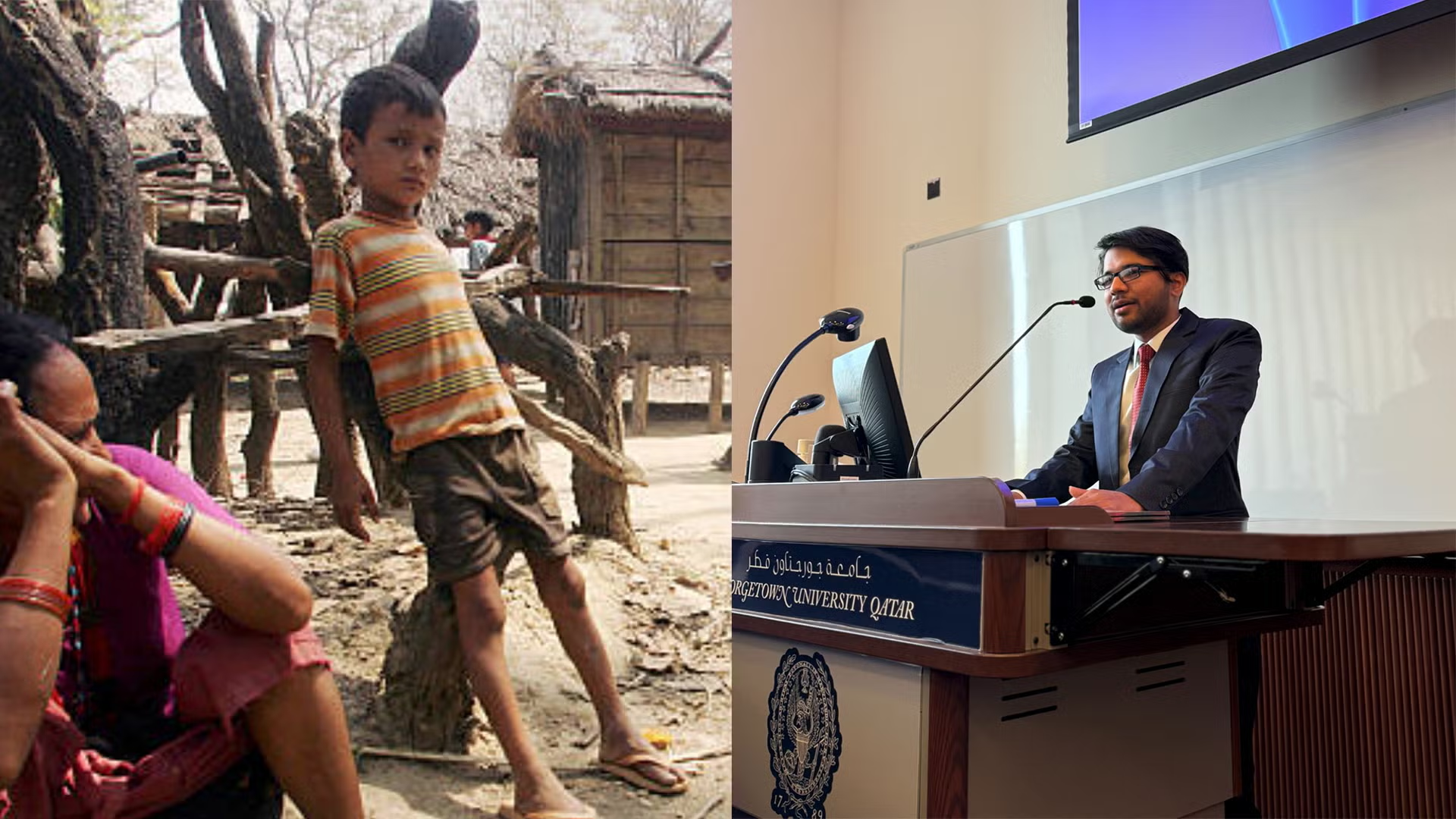
Bimba Panthi is only a rising sophomore, but he’s already a published author. In Lungri, he shares personal stories from Nepal’s Maoist insurgency, a ten-year civil war from 1996 to 2006, to show how it shaped everyday lives. The aspiring Science, Technology, and International Affairs major reflects on bringing his book to GU-Q and sharing it with the community at a South Asian Society event.
I did not live through the Maoist insurgency in western Nepal, but I grew up in its aftermath. Some children hear bedtime stories. I grew up hearing about neighbors disappearing, schools shutting down, and families sleeping in fear because both rebel fighters and government soldiers might come knocking at night.
My parents spoke about it casually at times, almost too casually, like people do when pain has stayed with them for too long. But in school, our history textbooks reduced those same ten years to a few neat paragraphs, as if that kind of fear could fit between two exam questions.
That disconnect stayed with me. I kept thinking: if people like my parents do not tell their stories, who will? So I did the only thing I knew how to do. I listened. I asked questions. I wrote everything down.
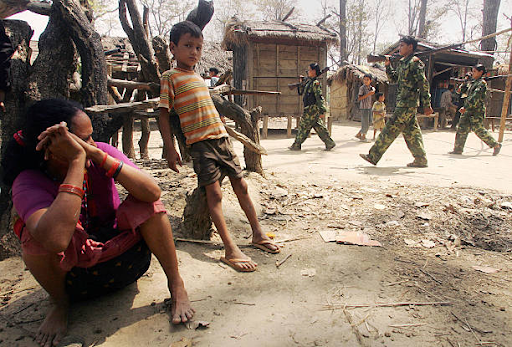
Getty Image of soldiers in Nepalese village, April 30, 2006
At first, I thought I was simply preserving memories. But over time, I realized I was trying to give ordinary people a voice. Behind every “casualty number” was a real person. Someone whose crops burned, whose family member never came home, whose childhood ended too early. Villages like my mother’s were caught between rebels promising change and a government responding with force. Years later, many families still live with the consequences.
Eventually, those stories became Lungri, a book I published seven months before coming to Georgetown.
Then I told almost no one about it.
The book existed, technically. But I treated it like an embarrassing diary I had accidentally published. When people asked what I liked to do, I said something vague like, “I write sometimes,” as if Lungri were just a forgotten file on my laptop, not a real book sitting on my shelf back home. Part of me felt proud of it. Another part of me was not ready to share it.
When I arrived in Doha, I brought that same uncertainty with me. I had two overpacked suitcases, no sense of direction, and very little confidence. Everything felt unfamiliar. The heat, the food, the campus, even the way people introduced themselves so easily. Everyone around me seemed accomplished and self-assured. Meanwhile, I was still figuring out how to say “hi” without overthinking it.
I assumed I would fade into the background.
Then I walked into Writing with Professor Magdalena Rostron and Proseminar with Professor Anne Nebel, and something shifted. For the first time, I did not feel like I had to pretend to be someone else to belong. I was a writer. Maybe an anxious one. Maybe one who overused commas. But still, a writer.
Those classes quickly became my safe spaces. Professor Rostron’s classroom felt lively and open. People laughed, interrupted each other, and changed their minds. She has a way of making you feel confident while pushing you to improve. Professor Nebel’s class felt more structured and intense. Every idea needed evidence. It was challenging, and I loved it.
In those classrooms, I began to see that the stories I carried from Nepal were part of something bigger. They connected to broader questions about conflict, power, and memory around the world. Slowly, I started telling people about Lungri. First my professors, then a few classmates. Each time felt uncomfortable, like handing over something deeply personal and waiting to see how people would respond.
But they did not dismiss it. They took it seriously. More importantly, they made me take it seriously too.
That changed everything.
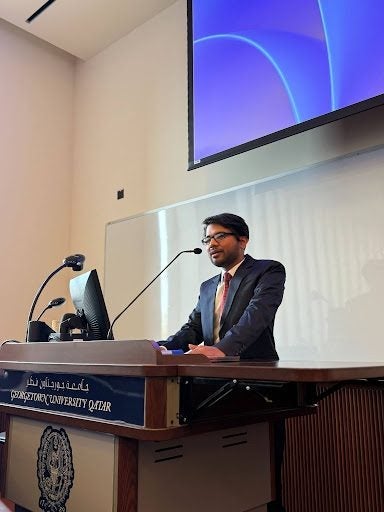
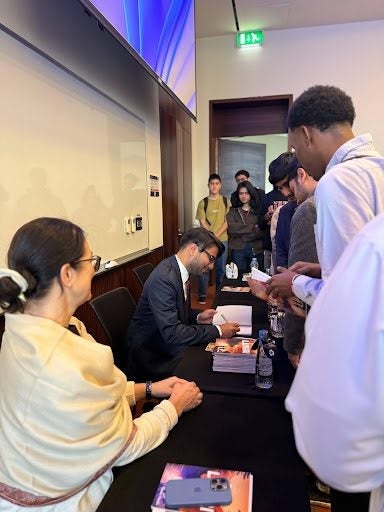
When the GU-Q South Asian Society organized a book launch for Lungri, I stood there and looked around the room in disbelief. My classmates and professors were discussing stories that had once existed only in my parents’ memories and my notes. People listened. Really listened.
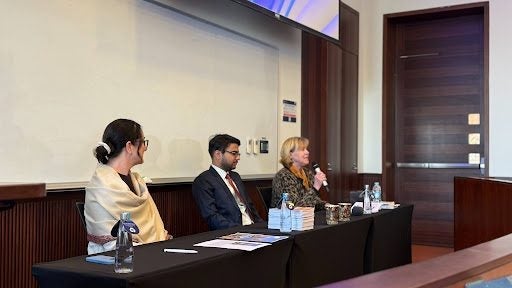
Professor Rostron and Professor Nebel lend their support at the South Asian Society Book Launch for Lungri
For the first time, I felt that my voice mattered.
I came to university worried I would lose myself. Instead, I found myself more clearly than ever, not just as a student or a writer, but as someone responsible for carrying stories forward.
Justice does not only come from courts or official reports. Sometimes it starts in smaller ways. Sometimes it begins with a simple refusal to let people be forgotten.
Maybe that is what writing has always meant to me. Not performance. Not recognition. Just memory pushing back against silence.
Filed under
Read More
Can fiction about animal minds help us bridge the human divide? This professor thinks so.
A region is more than its headlines: Preserving the history of the Afghanistan-Pakistan frontier